Palm Beach County has long watched Miami-Dade stack transit-oriented development after transit-oriented development along the Metrorail spine while its own Tri-Rail corridor sat largely unbuilt. That watching period may now be over.
A Court Ruling Just Unlocked the Most Important Transit Site in Downtown West Palm Beach
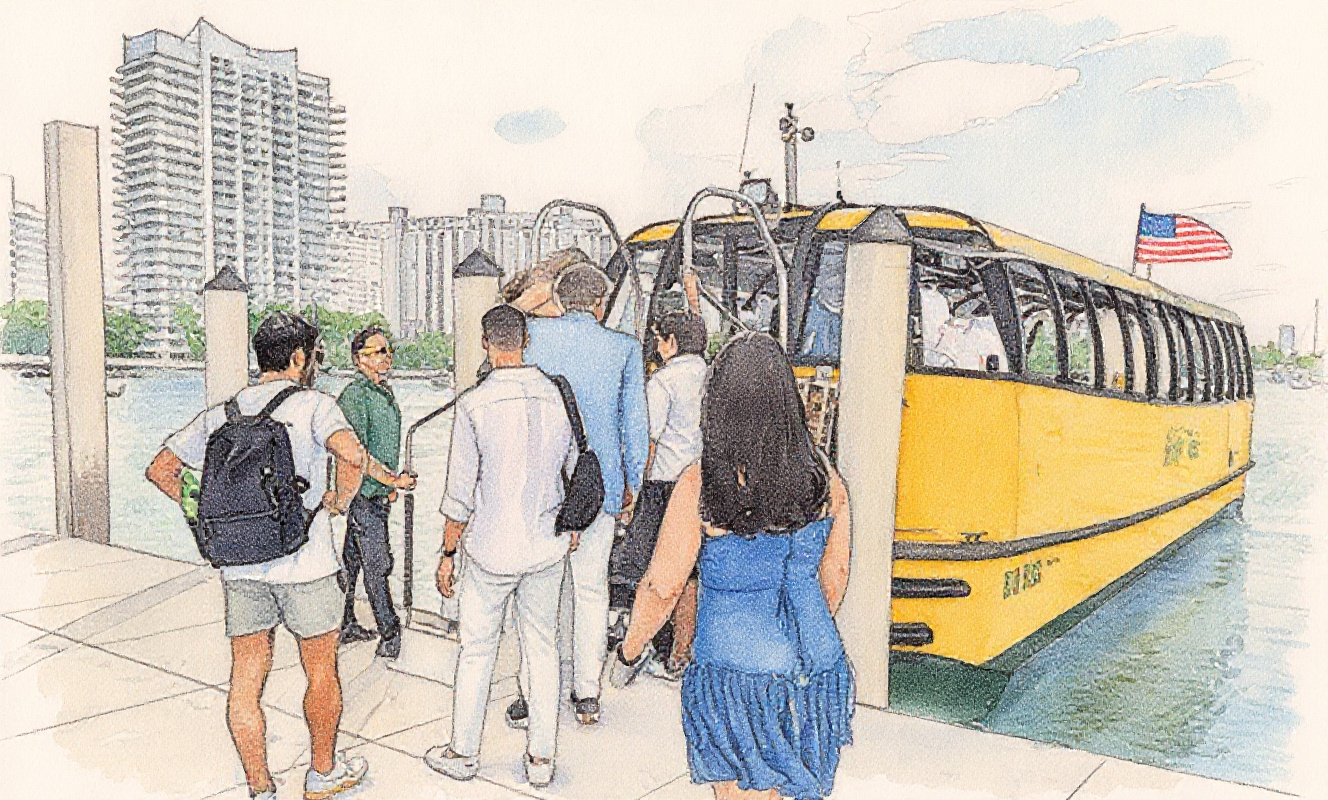
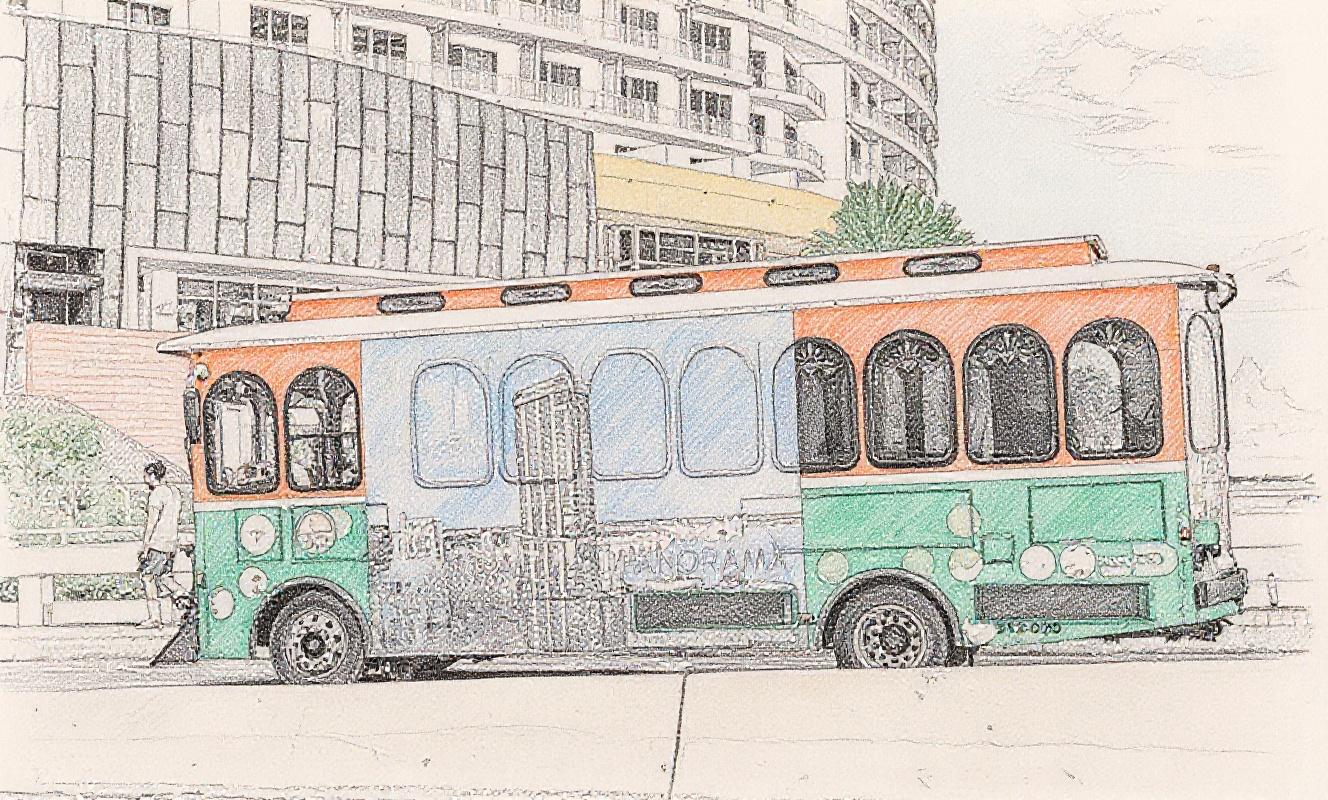
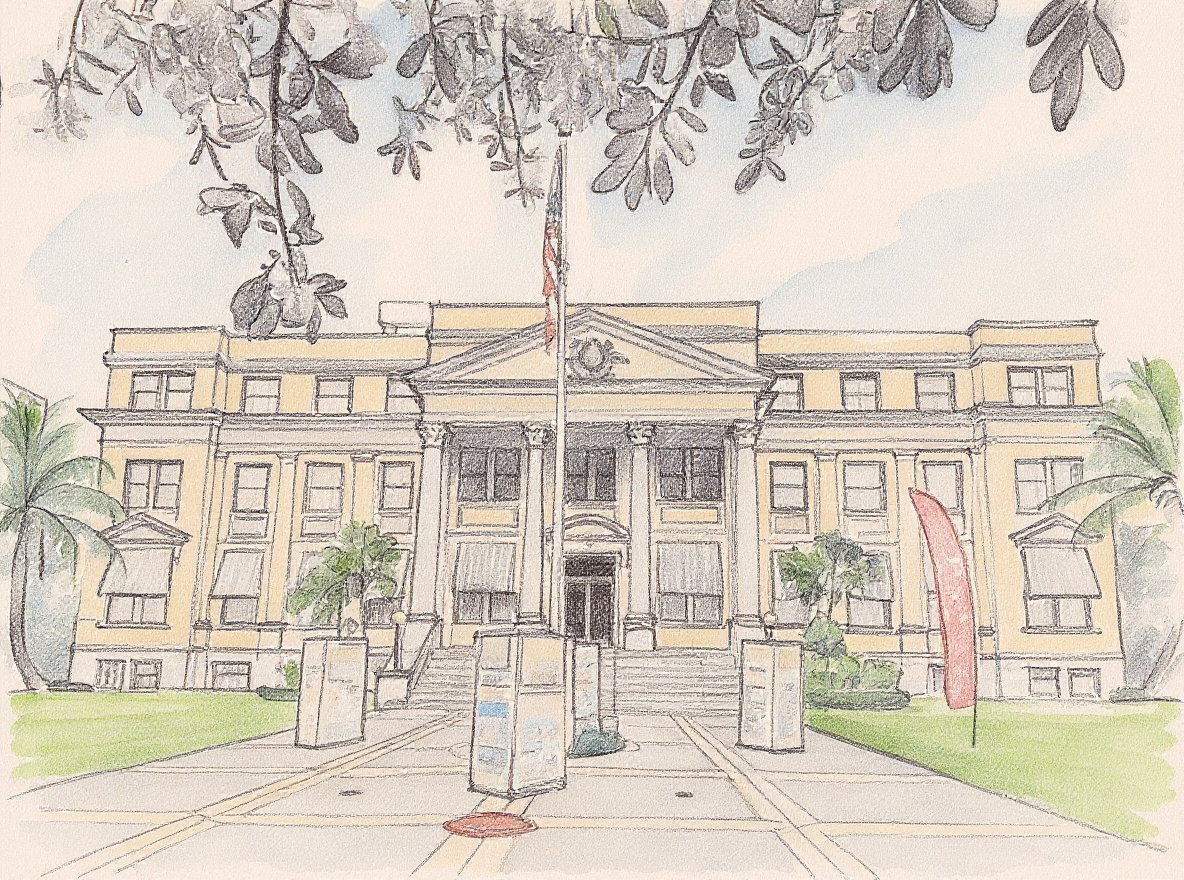
On August 3, 2026, Palm Beach County Circuit Court Judge Caryn Siperstein approved an arbitration award by retired Judge Jeffrey Colbath that cleared BH Group and Related Group to close on the Transit Village site at 150 Clearwater Drive — a 6.6-acre parcel adjacent to the city's Intermodal Transit Center, where Amtrak, Tri-Rail, city trolleys, and Greyhound buses all converge. After a two-year legal standoff over land pricing that threatened to kill the project entirely, the path to construction is now open.
- Transit Village's approved design calls for four 25-story towers with nearly 1,000 residential units, 180,000 square feet of office, 49,000 square feet of retail, and a 108-key hotel — 1.3 million square feet total.
- The project includes micro-units, workforce-priced rentals, and an elevated podium designed to knit riders directly into the transit hub below.
- Arbitrator Colbath's July 5, 2026 decision required a fresh market appraisal to determine the final sale price, a ruling adopted by Judge Siperstein on July 31 and implemented as final judgment on August 3.
- Investors include Aventura-based BH Group, Coconut Grove-based Related Group, and developer Michael Masanoff, who first assembled the deal more than a decade ago.
Link at Boca Proves the Development Model Pencils Out Along the Tri-Rail Corridor
The Transit Village unlock arrives just as the South Florida Regional Transportation Authority (SFRTA) is demonstrating — at Boca Raton's station — that Tri-Rail corridor TOD can actually get built. In February 2026, SFRTA broke ground on Link at Boca at 680 West Yamato Road, officially the first transit-oriented development in Tri-Rail's 37-year history. Miami-based 13th Floor Investments and Boston-based Rockpoint secured a $100 million construction loan from Santander Bank to finance the eight-story, 340-unit project, with delivery targeted for early 2028.
- Link at Boca includes 24,000 square feet of ground-floor retail and a 650-space parking garage shared by residents and Tri-Rail riders.
- 51 of the 340 units — 15 percent of the total — are income-restricted, including 34 affordable and 17 workforce apartments.
- The site sits steps from the Boca Raton Innovation Campus, a major employment hub just west of Interstate 95.
- SFRTA Executive Director David Dech called the Boca groundbreaking a milestone that "took nearly 21 years" to materialize, and Tri-Rail officials have framed it as a replicable model for every station on the line.
Record Ridership Makes the Economic Case That Developers Are Finally Hearing
The market is building around Tri-Rail precisely because riders are showing up. SFRTA reported that Tri-Rail logged 4,578,680 rides in Fiscal Year 2025 — a new all-time record, surpassing the previous high of 4,465,750 set in Fiscal Year 2019 and representing a full, post-pandemic recovery. The system averaged 14,500 weekday riders in the first quarter of 2026, and the Miami–West Palm Beach express service, which launched in July 2024, has grown its daily ridership 88 percent over its first nine months of operation.
That ridership baseline matters enormously for the TOD math. A rail line carrying 4.5 million annual riders is a genuine amenity that a 25-story apartment tower can advertise on its leasing website. The private capital flowing into Link at Boca and Transit Village reflects developers reading that ridership data and reaching the same conclusion: proximity to a working rail corridor is a competitive advantage in the South Florida rental market.
Palm Beach County's Next Move Is Building the Policy Infrastructure to Match
The Boca Post and Palm Beach Post's five-part "Moving Forward" series, published in August 2026, captures just how consequential this moment is for a county that added roughly 76,000 vehicles to its roads between 2020 and 2024 alone — and whose population climbed from 576,758 in 1980 to 1.49 million in the 2020 Census, with pandemic-era in-migration continuing since. Downtown West Palm Beach alone could absorb at least 10,000 new housing units over the next five years.
The opportunity is clear: Palm Beach County should use the Transit Village groundbreaking — once it comes — as the catalyst to accelerate station-area planning at every Tri-Rail stop in the county, from Mangonia Park south to Delray Beach. PGA Station in Palm Beach Gardens already has a transit-oriented development district in place, with 13-story towers in the approval pipeline. Boca Raton has a live construction crane. West Palm Beach now has a cleared legal path. The county's Transportation Master Plan, whose public engagement meetings wrapped up in July 2026, is the right vehicle to codify station-area zoning standards that make the next Link at Boca easier, not harder, to finance.
South Florida has seen what happens when rail ridership and housing density arrive at the same station at the same time: walkable districts form, car trips shorten, and transit systems grow stronger. Palm Beach County has the ridership. It has, at last, the development momentum. What comes next — if cities, the county, and SFRTA keep building in the same direction — is a commuter rail corridor that finally looks like the asset it has always had the potential to be.
Correction, October 11, 2026: An earlier version of this article said Tri-Rail averages 13,400 weekday riders. That figure included Fort Lauderdale airport bus service, which the South Florida Regional Transportation Authority (SFRTA) does not count as Tri-Rail rail ridership. SFRTA reports a rail-only weekday average of 14,500 for January–March 2026.