West Miami-Dade just delivered the most consequential proof-of-concept in Miami-Dade County's transit history — not a ribbon-cutting for a rail extension, but for 578 apartments whose front door is a bus bay.
Upland Park's Phase One Completion Turns a Park-and-Ride Into a Place
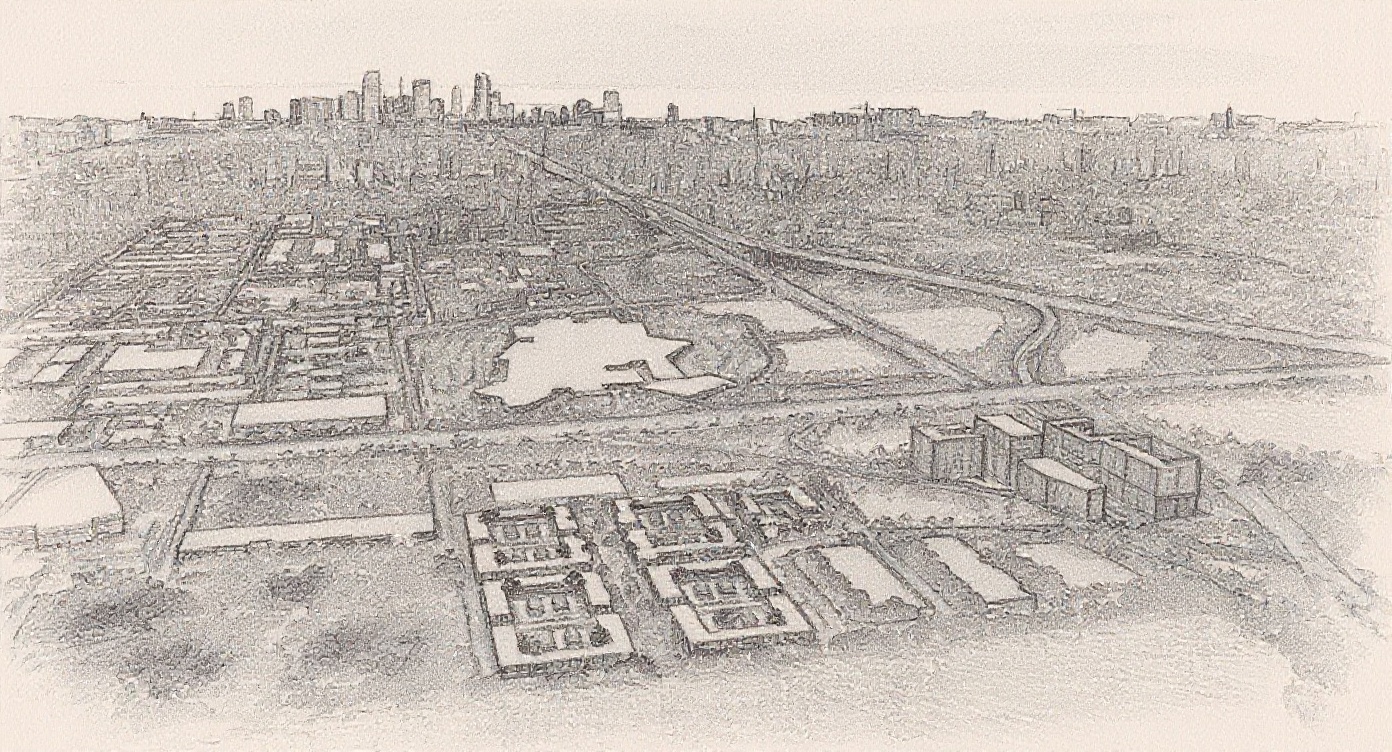
On July 23, 2026, developer Terra announced that Phase One of Upland Park — the county's largest transit-oriented community (TOC) — was complete and welcoming its first residents. The 47-acre, $1 billion project at 1455 NW 121st Avenue sits directly on top of the Miami-Dade County Dolphin Park-and-Ride Transit Terminal Facility in West Miami-Dade, redeeming a surface parking lot as a neighborhood.
- 578 multifamily apartments are now leasing, with residents already moving in as of July 23, 2026.
- Full buildout will add more than 2,000 apartments, roughly 282,000 square feet of retail, and about 414,000 square feet of commercial space.
- The 90-year development and land lease agreement is projected to generate over $1 billion in revenue for Miami-Dade County over its life.
- The partnership is a public-private deal between Terra and the Miami-Dade County Department of Transportation and Public Works (DTPW), designed by PPK Architects in collaboration with Arquitectonica and Plusurbia Design.
Mayor Daniella Levine Cava called it a model for integrating "housing, transportation, and economic opportunities" — and for once, that language is entirely accurate. The county didn't just zone for density near a stop; it handed a transit agency's own land to a developer with the explicit mandate to build a community on it.
The Dolphin Hub Already Connects Riders to Downtown and Doral
Upland Park isn't banking on a hypothetical train. The Dolphin Park-and-Ride is the anchor of the Metrobus 836 Express Route, which connects Downtown Miami through the City of Doral and other western urban centers — meaning the 578 households moving in this summer have a real, operating transit option on day one.
- The hub sits along the 836 Expressway corridor, which features a dedicated bus lane — one of the county's most reliable rapid-transit assets.
- Miami-Dade's SMART (Strategic Miami Area Rapid Transit) Program designates the East-West Corridor as a future premium transit spine; Upland Park is physically positioned to become its urban anchor.
- Metrobus network-wide carries roughly 4.9 million riders per month — the workhorse of the county's transit system and the reason this location already functions as a true hub.
Building density here, rather than on a greenfield far from any service, is exactly the sequencing that transit advocates have asked for. Residents arrive to find a bus waiting, not a construction fence.
A Rebuilt Metromover Closes the Downtown Loop
The other half of this story is happening four miles east. The Metromover — Miami's free, fare-free automated people mover threading through Downtown, Brickell, and the Omni district — is in the final stretch of a $153 million Comprehensive Wayside System Overhaul that began in 2022 and is targeted for completion this year. DTPW contracted Bombardier Transportation (Holdings) USA, Inc. for the work, which replaces aging subsystems that had reached the end of their design lives.
- The upgrade is designed to reduce service disruptions, increase vehicle frequency, cut maintenance costs, and extend the system's lifespan by 30 years.
- The Metromover carries roughly 25,600 weekday boardings (Q4 2025) across its 21 stations and 4.4-mile network — a ridership floor that will grow as Brickell and Downtown continue to densify.
- DTPW is already planning a subsequent vehicle procurement once the track work is finished, opening the door to newer, more reliable cars.
The temporary Saturday service modifications — Metromover starting at 2 p.m. on July 25 and August 1 to allow continued upgrade work — are a small, necessary price for what comes next: a system that doesn't strand riders mid-loop.
What the Two Projects Together Actually Mean
Place Upland Park and the Metromover upgrade side by side and a coherent strategy emerges: Miami-Dade is simultaneously reinforcing its downtown transit spine and seeding a new transit-oriented neighborhood at its western transit gateway. The residents moving into Upland Park's first apartments today are the same demographic that an upgraded, reliable Metromover will eventually serve if the East-West Corridor reaches its BRT or rail potential — connecting Doral workers to Brickell offices without touching I-836.
That connection isn't built yet. The SMART East-West Corridor is still in planning, and closing the gap between the 836 Express and the downtown loop remains the critical next step. But the county has now demonstrated, with real money and real residents, that it can build the neighborhood first and earn the ridership that justifies the next investment. Terra delivered on time. DTPW is upgrading its infrastructure. Miami-Dade Mayor Daniella Levine Cava's administration has the public-private playbook working.
When the East-West Corridor is eventually funded and built, Upland Park's several thousand residents will be among its most enthusiastic riders. The county will have spent decades watching surface parking lots sit idle at its transit hubs. It's building something better now — and that's worth celebrating before the ribbon is even cut on Phase Two.