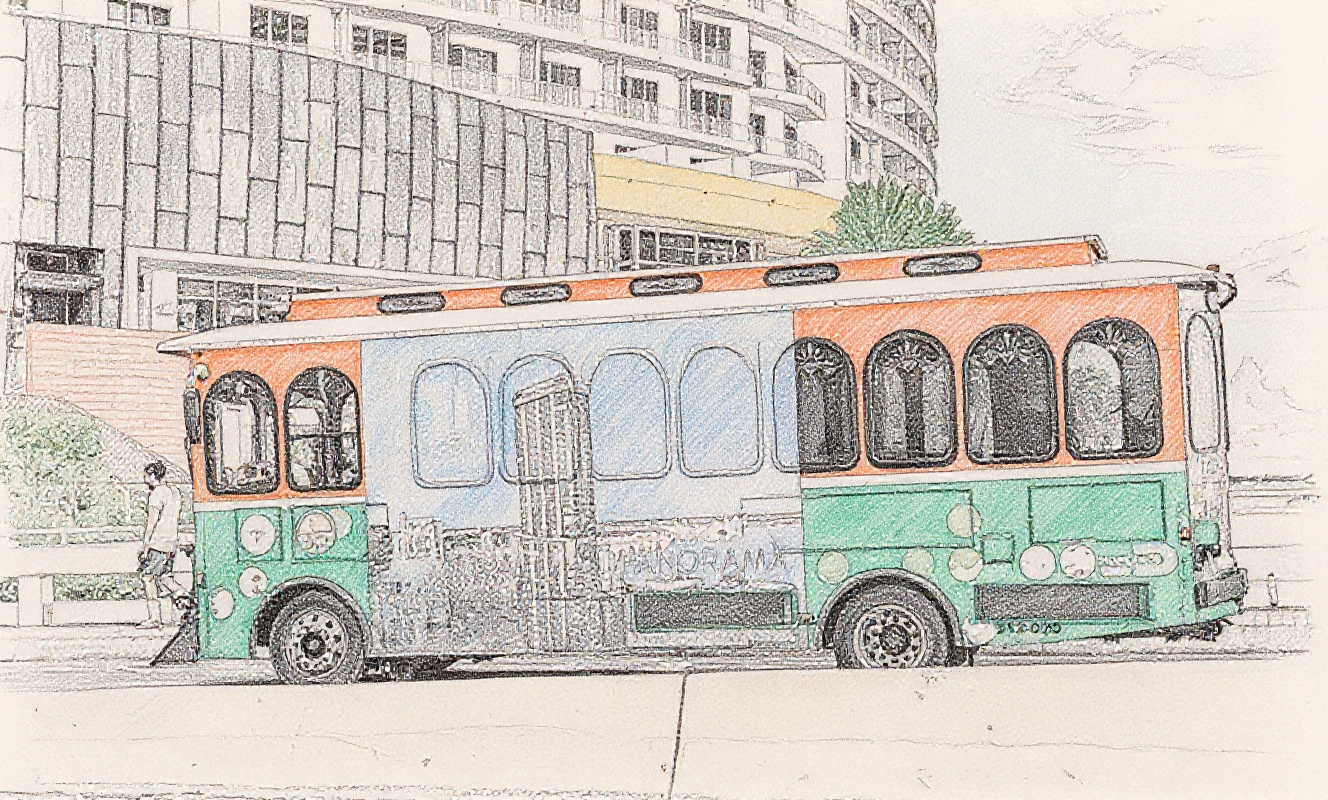
Miami's free trolley network — already the connective tissue linking Allapattah to Brickell, Liberty City to Coconut Grove — is on the verge of becoming something more consequential: a fully electric, professionally managed, municipally owned transit utility that the rest of South Florida will study and copy.
Miami's trolley system is ready for a structural leap forward
On September 24, 2026, the Miami City Commission directed City Manager Art Noriega to complete a comprehensive market study before selecting a new procurement method for future trolley services — a pivotal step that moves the network from an incrementally managed fleet into a strategically governed system. The commission directed the city manager to complete a comprehensive market study before selecting a procurement method, requiring the study to assess the existing fleet, operating costs, service levels, and projected vehicle and service needs as the city grows. Crucially, depending on the procurement method selected, the city could place responsibility for operating services and providing and maintaining vehicles under a single entity — a bundled model that would dramatically simplify contract management and sharpen accountability for service quality.
- Commissioner Rolando Escalona sponsored the September 24 resolution
- The study must evaluate fleet condition, operating costs, service levels, and growth projections
- A unified operator model could consolidate vehicle procurement, maintenance, and service delivery
A $56M electrification blueprint is already on the table
The market study comes as Miami pursues a longer-term plan to replace its trolleys with battery-electric buses by 2035 at an estimated cost of $56 million. That plan is grounded in a clear technology choice: the city recommended battery-electric buses over fuel-cell-electric buses, citing cost efficiency, established performance, and more widely available charging infrastructure, and outlined phased replacement scenarios aimed at converting the fleet by 2035, either by retrofitting the existing facility at 3737 NW 43rd St. or developing a new facility. State funding is already flowing to validate the timeline. In May 2024, the state contributed $1.8 million to replace four aging trolleys, and in November 2025, the city commission accepted a separate $1.1 million grant from the Florida Department of Transportation to purchase three replacement vehicles.
- Total electrification target: full fleet conversion by 2035
- $56M projected cost covers vehicles and facility upgrades in phased scenarios
- Battery-electric chosen over hydrogen for cost efficiency and charging infrastructure availability
- $2.9M in state grants already secured for incremental replacements
The 13-route network is already earning its upgrade
The City of Miami currently operates a 13-route, 112-mile trolley system — and it is free to ride. The city reinstated the trolley program in 2012 to alleviate traffic congestion and provide free mass transit to underserved areas. Ridership advocacy is visibly shaping the network in real time: a pilot program adding trolley service in Liberty City on Saturdays — previously absent despite trends of high ridership in the neighborhood — was made permanent. That kind of community-driven iteration is exactly what a network of this scale needs to stay relevant as Miami grows denser and faster. The trolley is not a tourist amenity; it is a genuine mobility layer for tens of thousands of residents who rely on it for work, school, and healthcare trips that buses and rail don't efficiently serve at the neighborhood scale.
- 13 routes spanning 112 miles — free to all riders seven days a week
- Saturday Liberty City service made permanent after community advocacy by the Liberty City Trolley Riding Club
- Commissioner Christine King advocating for additional routes along Biscayne Boulevard to expand coverage
Getting the procurement right is what unlocks the rest
The market study the commission ordered is the most important near-term decision this network faces — and the city is approaching it the right way. Before locking in a vendor or a model, Miami wants to understand what the market can actually offer: bundled operations-plus-vehicles contracts, managed services agreements, and emerging EV fleet-as-a-service arrangements have all reshaped municipal transit procurement in the last three years. Getting that answer right in 2026 means the electrification rollout beginning around 2028 starts from the strongest possible contractual foundation. The upgrades are part of broader efforts to reduce vehicular congestion, improve pedestrian mobility, and enhance transit service as Miami continues to grow, while steadily transforming the trolley fleet into a more reliable, sustainable network.
When this goes right — and the trajectory says it will — Miami ends up in 2035 with a 13-route, fully electric, professionally unified transit utility that is free to every rider, quiet enough to run through dense urban neighborhoods without complaint, and charged off a grid that Miami's own climate commitments are pushing toward clean energy. That is not a footnote to South Florida's transit story. That is its most equitable chapter.