When a city and its most storied institution agree on the next 30 years together, and the physical center of that agreement is a Metrorail station, South Florida's transit conversation changes in a fundamental way.
The Coral Gables–UM Development Agreement Is a Transit-Anchored Growth Plan in Disguise
On September 30, 2026, the Coral Gables City Commission gave final approval to a sweeping 30-year development agreement with the University of Miami (UM) — a 217-page framework that, read carefully, is as much a transit-oriented development plan as it is a campus master plan. The deal lifts student enrollment from 13,000 to 17,500, replaces the campus's fixed 6.8-million-square-foot development cap with a floor area ratio structure permitting roughly 10.5 million square feet, and unlocks hospital use for the first time in the campus's history. Every major growth node in the agreement sits within walking distance of the University Metrorail Station on the Miami-Dade Metrorail (Metrorail) Green and Orange Lines.
- Enrollment threshold rises from 13,000 to 17,500 students — a 35% increase — before additional city approvals are triggered.
- UM conveys the 5.52-acre Lee Lincoln Parcel (estimated at $50 million) to Coral Gables for Centennial Park, the city's largest public green space.
- The city receives an annual 4% payment increase from UM throughout the 30-year term.
- Miami-Dade County commissioners approved $500 million in revenue bonds in March 2026 for capital projects across five UM locations, anchoring the financing backbone.
Gables Village Places 1,458 New Beds at the Station's Front Door
The most visible first act of this expanded relationship is Gables Village, a 573,804-square-foot residential complex designed by Arquitectonica that will rise on the site of the aging Mahoney-Pearson Residential College. Demolition began in summer 2026, with occupancy targeted for fall 2028. The project is the third and final phase of UM's Housing Facilities Strategic Plan, and its site placement is a direct transit dividend: the two multistory towers sit on a current surface parking lot positioned between the University Metrorail Station and the Watsco Center — making them arguably the most transit-adjacent student housing construction in South Florida right now.
- Two towers — nine and ten stories — deliver 1,458 beds, the majority in single-occupancy rooms.
- A 700-seat dining hall, classrooms, study lounges, and landscaped pedestrian corridors complete the complex.
- Full-time UM students already receive a 50% discount on monthly Metrorail and Metrobus passes, meaning each new resident is a pre-subsidized transit rider.
- Centennial Village, Phase 2 of the same housing plan, added 881 beds in 2024, building the ridership foundation Gables Village will expand.
A Potential Hospital Between the Station and Watsco Center Anchors the Medical Mile Logic
The most consequential long-term provision of the agreement is the authorization of hospital use within the campus Multi-Use Zone for the first time. A facility with up to 100 beds — including inpatient, outpatient, and emergency care — would represent a fundamental expansion beyond the existing Lennar Foundation Medical Center, which currently handles only outpatient services. UM's own planning documents identified the stretch along Ponce de León Boulevard as the preferred hospital corridor, specifically noting "easy access to public transit." That language is not incidental: the University Metrorail Station already serves as the direct rail link between the Coral Gables campus and UM's medical campus at Jackson Memorial Hospital, where the Civic Center Metrorail station connects resident physicians and students to the Health District daily.
- The hospital site — a surface parking area between the University Metrorail Station and the Watsco Center — would be purpose-built around the existing Metrorail stop.
- UHealth, UM's academic medical system, already operates 700 beds across 40 locations in Miami-Dade, Broward, Palm Beach, and Collier counties; a Coral Gables inpatient facility would anchor the network's geographic center.
- No construction timeline has been set; the agreement creates the permission, not the project — which gives the city and UM time to plan the urban design details well.
The RTZ Subzone and the City's Overlay Are Working Together to Raise the Floor on Quality
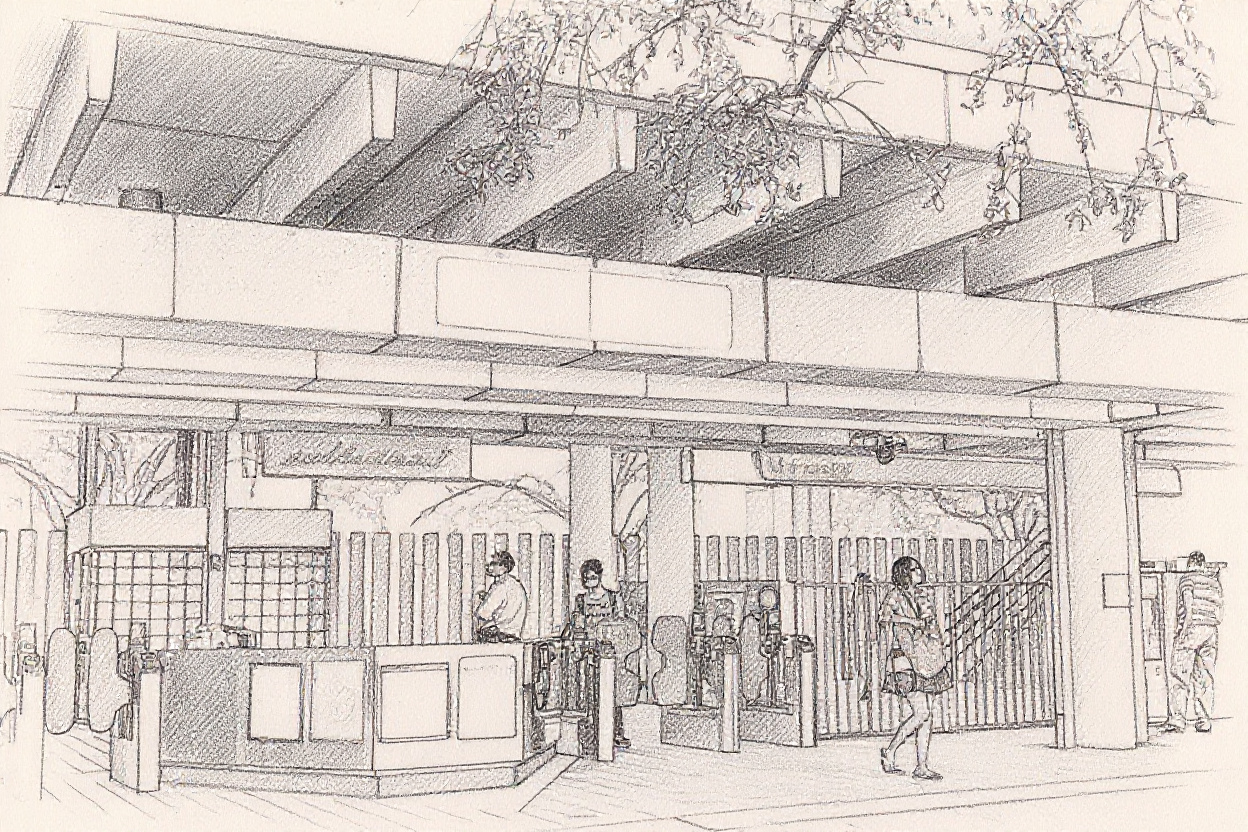
All of this campus activity lands in a governance moment that is making the University Station corridor one of the most thoughtfully contested transit nodes in the region. Miami-Dade County established the Coral Gables/University Station Subzone of the Rapid Transit Zone (RTZ) in September 2025, granting the county authority over development within a quarter-mile of the station. Coral Gables responded by advancing its own University Station Rapid Transit District Overlay — a local framework allowing buildings up to 120 feet (147 feet with public open space) and preserving city-level architectural review. Far from a conflict, this two-layer approach is producing something rarer: density with design accountability. The 30-year UM agreement adds a third layer — a generational institutional commitment — that gives developers, the county, and the city a stable planning horizon almost no other transit node in South Florida can claim.
The station already links Coral Gables to Brickell, Downtown Miami, Miami International Airport, and Dadeland via two Metrorail lines. As 4,500 more students, 1,458 new dorm beds, a potential hospital, and a cascade of mixed-use projects fill in around it, the University Metrorail Station is quietly becoming something South Florida has long wanted: a transit node where the density earns its place, the institutions anchor the ridership, and the city and county have actually agreed on what comes next.
Get that right, and the University Station corridor becomes a template — proof that a 42-year-old Metrorail station and a 30-year development agreement can build the kind of walkable, transit-first neighborhood that planners have sketched on whiteboards for decades.