Two stories landed in the same July week that, read together, reveal something genuinely new about how South Florida funds and uses its transit network: the region is starting to treat rail corridors as assets, not just expenses.
Tri-Rail's New FDOT Deal Turns Station Land Into a Revenue Engine
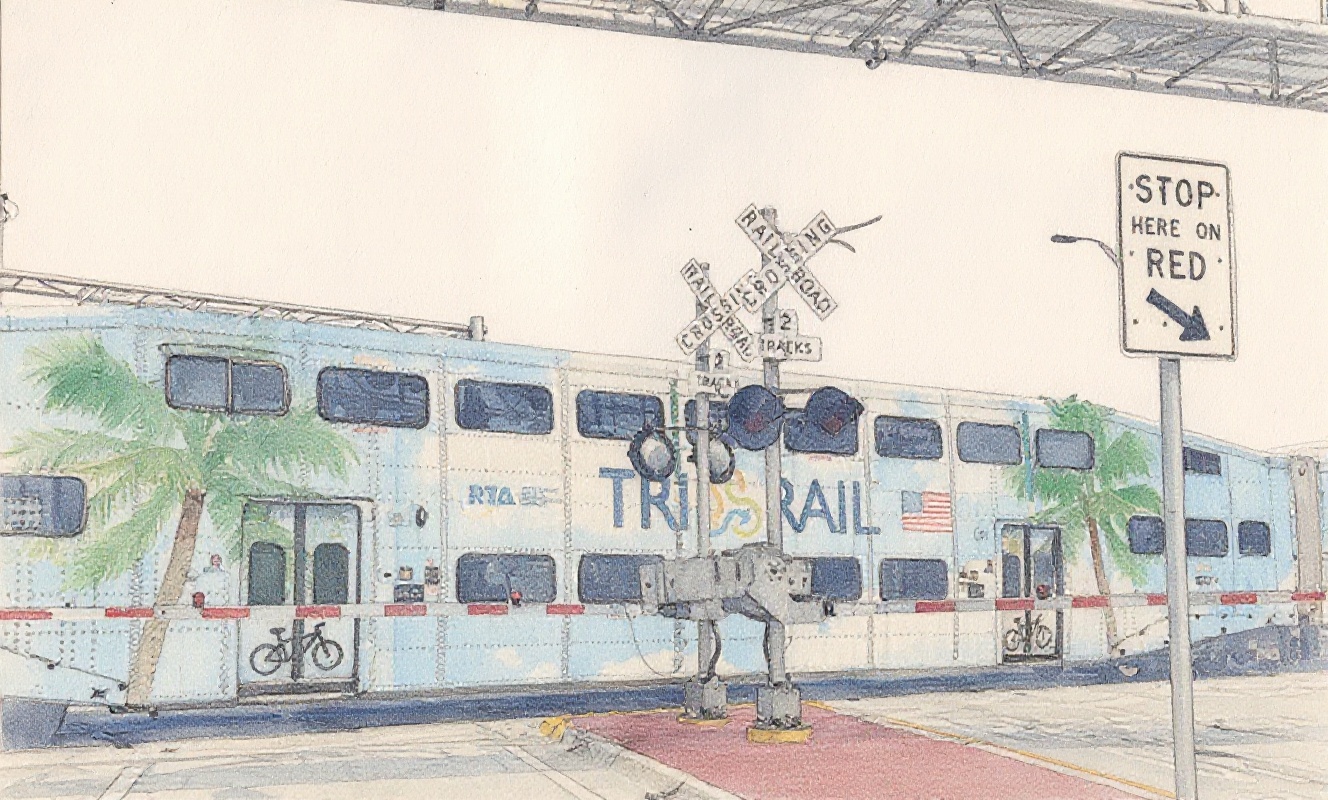
On July 29, 2026, Miami Today reported that the South Florida Regional Transportation Authority (SFRTA) — which operates Tri-Rail — is finalizing a memorandum of understanding with the Florida Department of Transportation (FDOT) under which FDOT will lease station properties it owns to SFRTA for 99.5 years, effectively a fee-simple transfer, so that SFRTA can build transit-oriented development (TOD) on those sites and charge fees that flow directly back to the railroad. SFRTA Board Chair and Miami-Dade Commissioner Raquel Regalado described the deal as the foundation of a plan to make Tri-Rail measurably less dependent on volatile annual state appropriations.
- FDOT's annual funding contribution will decline over a 10-year transition window ending by 2037, per former SFRTA executive director Steve Abrams.
- SFRTA is also exploring a Transportation Improvement District (TID) over the entire 80-mile corridor — capturing value from development near all 19 stations, most of which currently pay no property taxes.
- Only two Tri-Rail stations have active TODs today; the 99.5-year lease framework is designed to unlock the rest.
- Tri-Rail recorded 4.5 million riders in 2025, its strongest year in recent memory, giving developers a real ridership case to underwrite against.
- A new fare collection system and county-based fare zones are in development, which will improve revenue capture at the system's largely open-access stations.
What makes this structurally interesting is the sequence: SFRTA secures long-term site control first, then layers TOD fees and a TID on top. That ordering matters — it gives private developers the legal certainty they need to sign ground leases, and it gives SFRTA a funding stream that grows as the corridor densifies, rather than shrinking every time Tallahassee rewrites a budget line.
The Underline's Final Mile Into Coral Gables Is Closing the Loop
At exactly the moment Tri-Rail is rethinking how it earns revenue, the region's most ambitious active-transportation project is wrapping up. The Underline Phase 3 — a 7.36-mile segment running from SW 19th Avenue near the Vizcaya Metrorail station all the way to Dadeland South Metrorail Station through Coral Gables, South Miami, and unincorporated Miami-Dade County — is expected to complete construction in 2026. The $109 million phase threads together eight Metrorail stations and, as of this summer, is in final installation mode: the City of Coral Gables confirms that Segment 6 of the M-Path, between LeJeune Road and Granada Boulevard, is closed through Summer 2026 for the installation of bike and pedestrian trails, plantings, lighting, furnishings, and amenities.
- The full 10-mile Underline, when complete, will sit within a 10-minute walk of 107,000 residents.
- Phase 3 adds roughly 1,800 new trees, 350,000 native plants, and 24 microforests along the corridor.
- Separated bike and pedestrian paths, improvements at more than 30 intersections, public Wi-Fi, and Dark Sky-compliant LED lighting are all part of the final build.
- Funding comes from Miami-Dade County, the City of Coral Gables, the City of Miami, FDOT, and the Federal Transit Administration (FTA), along with the Knight Foundation and private contributions.
- At Dadeland South, The Underline connects directly to the South Dade Trail, creating a continuous non-motorized corridor extending toward Florida City.
The Underline was always about more than recreation. By making the walk and bike ride to a Metrorail station safer, shadier, and more pleasant, it lowers the friction cost of leaving a car at home — the behavioral step that transit ridership ultimately depends on.
Together, These Two Projects Show What Self-Sustaining Transit Infrastructure Looks Like
The Tri-Rail TOD strategy and The Underline share a logic: invest in the land and the corridor around the train, and the train pays for itself more easily over time. Station-area development generates lease revenue and tax base. Active-transportation infrastructure generates ridership. Ridership justifies more service. More service attracts more development. The loop closes.
South Florida has long been accused of treating transit as a charity rather than an asset. What's shifting in mid-2026 is the language. SFRTA Chair Regalado is talking about fee income, 99-year ground leases, and TIDs — the vocabulary of real estate finance applied to rail. Meg Daly and Friends of The Underline built a public-private partnership that mobilized federal, state, county, city, and philanthropic dollars around a single corridor. Neither story is a lucky accident; both are the product of years of patient coalition-building.
When Phase 3 of The Underline opens fully, a cyclist will be able to ride from Brickell's Miami River waterfront all the way to Dadeland on separated paths, touching eight Metrorail stations along the way, and eventually connect to a trail system reaching south toward Homestead. When the SFRTA-FDOT lease agreements are executed, Tri-Rail will begin the slow, deliberate work of turning underused parking lots around suburban stations into the kind of walkable, transit-served neighborhoods that generate their own operating revenue.
That's not a transit fantasy. That's a construction site and a term sheet — and South Florida is building both at once.