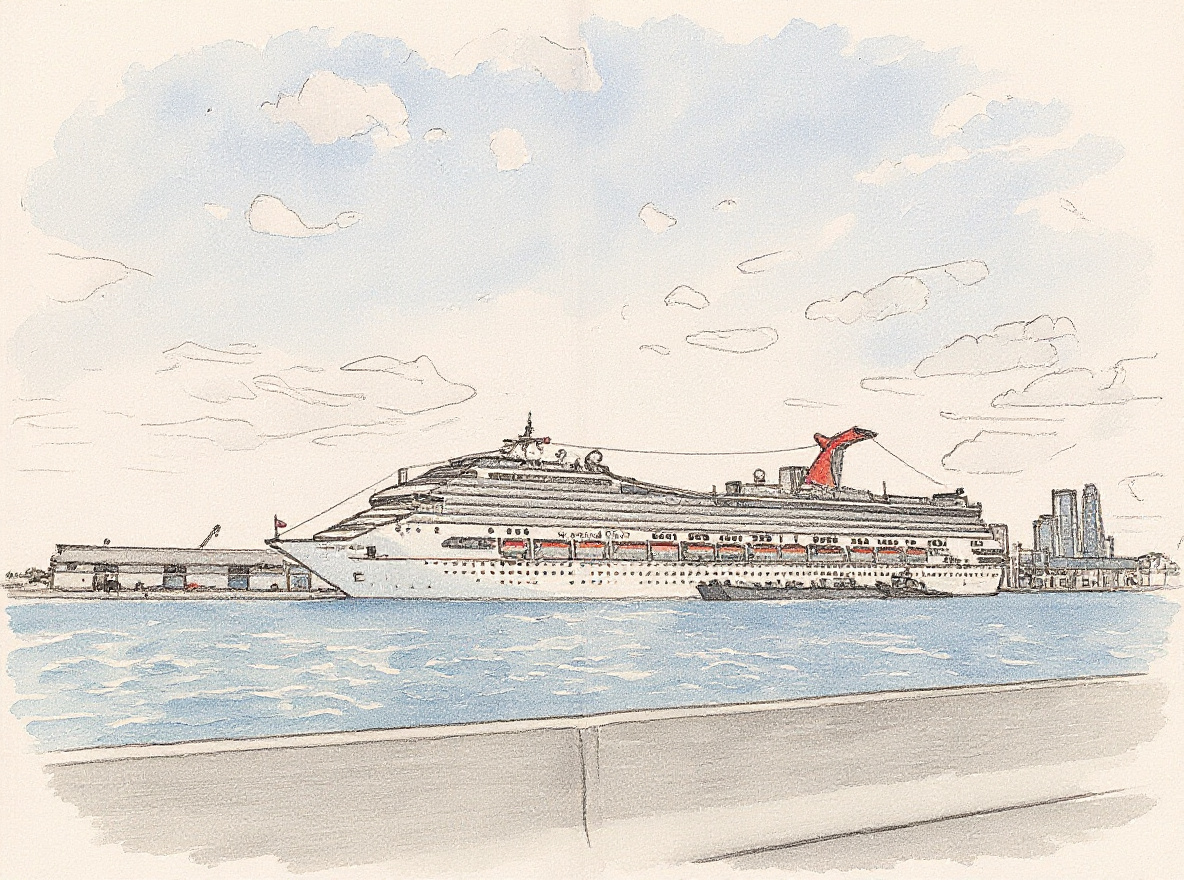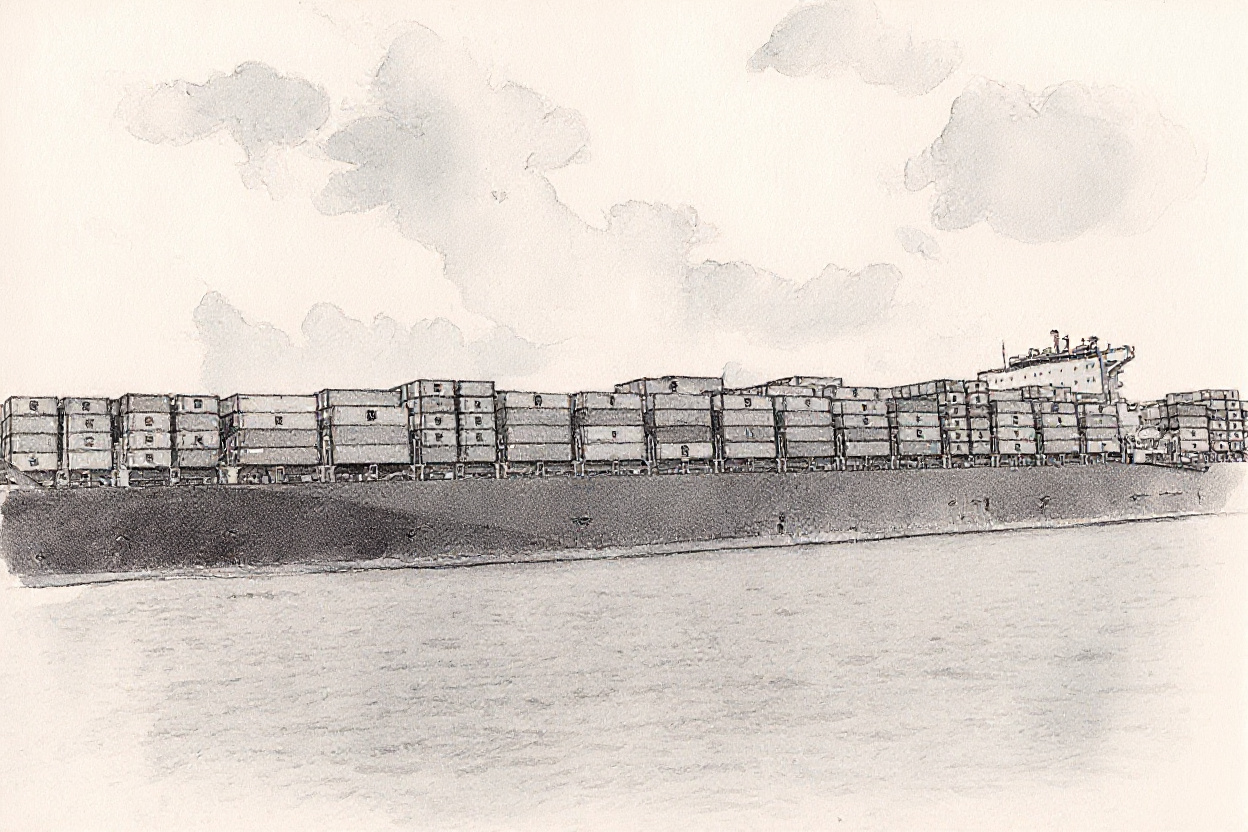
The largest cargo ship in Port Everglades' history docked in Fort Lauderdale on August 11, 2026, and left with a hold that was nowhere near full. That gap between what the MSC Vandya can carry and what it was allowed to carry is the most honest statement South Florida's freight economy has made in years — and it points directly toward the one infrastructure investment that can close it.
Port Everglades Is Already Delivering Record Cargo Performance
Broward County's Port Everglades ended fiscal year 2025 with 1,167,552 twenty-foot equivalent units (TEUs) of containerized cargo — its best cargo year ever — even as it operates under channel-depth constraints that force the industry's newest mega-vessels to arrive partially ballasted. That record-setting throughput, achieved while the port waits on a deepening project authorized nearly a decade ago, speaks to the talent and hustle of a port that generated $48.3 billion in business activity last year and supports 13,139 direct local jobs and nearly 295,166 jobs statewide.
- FY2025 TEU record: 1,167,552 — Port Everglades' all-time high
- $48.3 billion in annual business activity generated by the port
- 13,139 direct local jobs; nearly 295,166 statewide jobs supported
- Operating revenues of $235.6 million and net income of $103.7 million in FY2025
- Port Everglades is a self-supporting enterprise fund — not reliant on Broward property taxes
The MSC Vandya's Visit Made the Case That PENIP Can't Wait
On August 11, the MSC Vandya — 143,521 gross tons, 1,200.2 feet long, capable of carrying 13,050 TEUs — became the largest cargo ship ever to call at Port Everglades. It had to enter lightly loaded because the port's current water depth restricts inbound ships to roughly 8,000 TEUs. Port Everglades CEO and Port Director Joseph Morris put it plainly: until the navigational channel is deepened and widened, ships will either arrive under capacity or be diverted to competing ports entirely, adding cost and time to every link in the regional supply chain. The MSC Vandya was a live demonstration of untapped potential, and Port Everglades and Broward County used the occasion exactly right — as a public argument for accelerating the Port Everglades Navigation Improvements Project (PENIP).
- MSC Vandya stats: 143,521 gross tons; 1,200.2 feet long; 13,050 TEU capacity
- Current port depth limit: approximately 8,000 TEUs per inbound vessel
- PENIP goal: deepen the main channel from 42 feet to 48 feet (50 feet with overdepth allowance)
- MSC Vandya visited as part of MSC's Dragon Service to the Far East
- Broward County has planned approximately $3.8 billion in capital improvements over the next 20 years
PENIP Has a Real Path Forward — and a Responsible One
Congress authorized PENIP through the Water Resources Development Act (WRDA) of 2016, and Broward County, the U.S. Army Corps of Engineers (USACE), and their environmental partners have spent years making this one of the most environmentally rigorous port deepening projects in the country. The natural environment at Port Everglades — manatees, coral reefs, limestone hardbottom, seagrasses — demands that care, and port leadership has embraced the scrutiny rather than chafed against it. The final environmental impact statement is expected by November 2026, with a contract solicitation scheduled for the summer of 2027. That timeline is achievable, and the project's completion would unlock more than 1,500 permanent new direct jobs tied to expanded vessel cargo capacity.
- PENIP authorized: December 2016, Water Resources Development Act
- Final environmental impact statement expected: November 2026
- Contract solicitation target: summer 2027
- PENIP completion projected to create more than 1,500 permanent direct jobs
- Environmental scope: coral reef, manatee, mangrove, and seagrass mitigation protocols required
South Florida's Freight Network Gets Stronger When the Whole Stack Works
Port Everglades does not sit in isolation. It anchors a freight ecosystem that already includes the Florida East Coast Railway (FECR), which connects PortMiami, Port Everglades, and the Port of Palm Beach to the national rail grid via Jacksonville — reaching 70 percent of the U.S. population in one to four days. Miami International Airport (MIA) hit a new milestone in 2025, becoming the busiest freight airport in the Western Hemisphere with nearly 3.5 million tons of cargo, and its Q1 2026 shipments were already up 15.7 percent year over year. A deeper Port Everglades plugs directly into that momentum: bigger ships on fewer trips mean lower costs, lower emissions per ton-mile, and a regional supply chain resilient enough to compete with any port on the Eastern Seaboard. When PENIP crosses the finish line, South Florida won't just be moving more cargo — it will be moving it smarter, cleaner, and on its own terms.