Broward County just made the most ambitious land-use proposal in western Broward in a generation — and if the county pairs it with the transit connections it deserves, Sunrise will stop being a suburb that empties out at midnight and start being a neighborhood that actually lives.
Broward County's Amerant Bank Arena Plan Turns Parking Into a 24/7 Urban Quarter
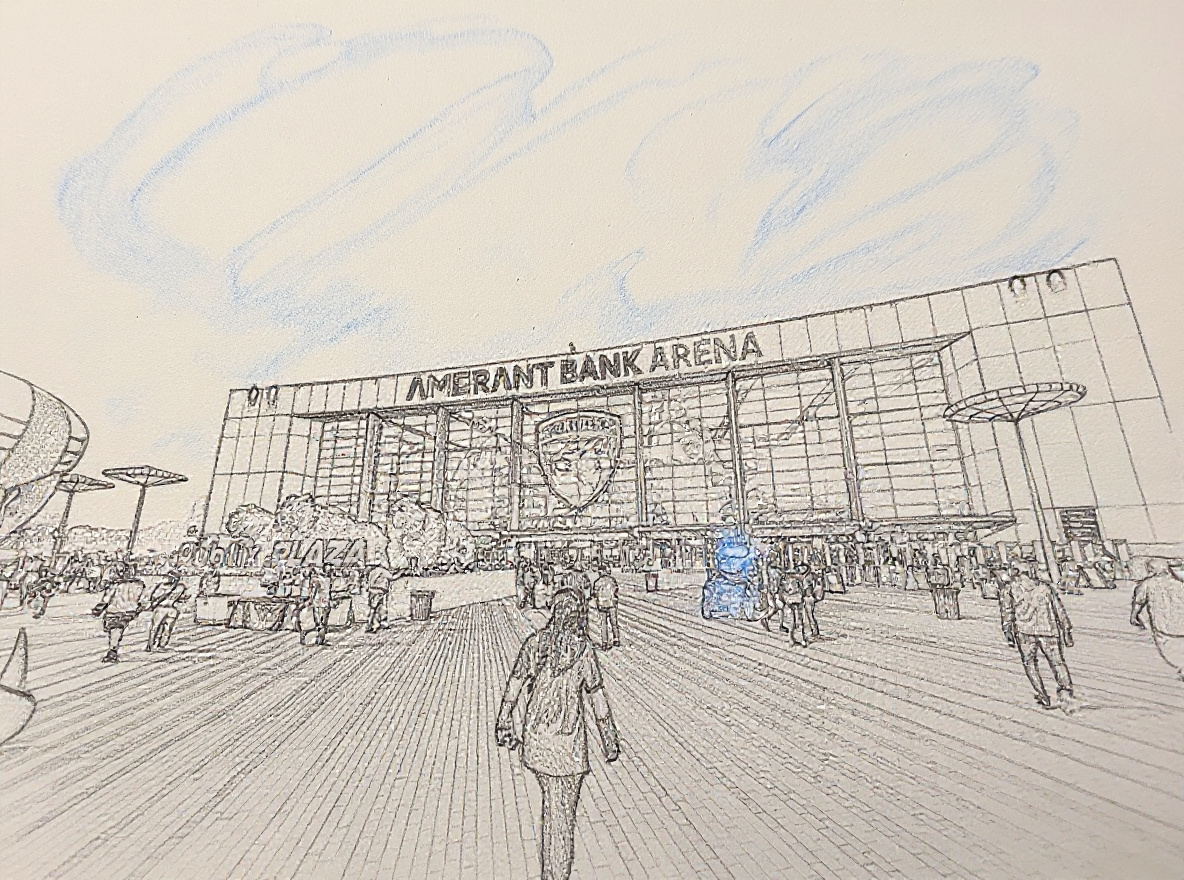
On August 10, 2026, Broward County submitted an application to the Sunrise City Commission to redevelop the 154-acre ring of surface parking surrounding county-owned Amerant Bank Arena into a full-scale mixed-use district. The proposal calls for approximately 1,400 multifamily units — 15 percent designated as affordable housing — alongside 300,000 square feet of commercial space, 1.6 million square feet of office and educational use, 600 hotel rooms, and roughly 10 acres of public green space, all carved out of what is today a 7,500-space asphalt expanse that sits quiet for roughly 300 nights a year.
- The 154-acre site is currently dominated by surface parking that serves the arena only on event days.
- Affordable housing is built into the proposal at 15% of the 1,400 residential units, representing approximately 210 income-restricted homes.
- The existing Amerant Bank Arena — home of the two-time Stanley Cup champion Florida Panthers — would remain in place.
- Sunrise commissioners must first approve a land-use designation change; if they do, a Broward County Land Use Plan amendment and adoption hearing would follow within six months.
The "Battery Atlanta" Model Works — and Broward Has Everything It Needs to Replicate It
The instinct behind this proposal is sound urban economics. A sports venue that draws 20,000 people on a Tuesday night already proves there is foot traffic; the question is whether the surrounding land can capture value on the other 300 nights. Mixed-use entertainment districts built around arenas — from the Battery Atlanta at Truist Park to the district surrounding Frisco, Texas — have consistently converted event-day crowds into year-round retail, hospitality, and residential demand. Broward County owns the land and owns the arena. That combination of public land control and anchor-venue gravity is rare, and the county is right to use it.
- Broward County's ownership of both the arena and surrounding land removes the most common obstacle to arena-adjacent development: fragmented private parcels.
- The 600-room hotel component would give the district genuine overnight demand independent of Panthers home games.
- The 1.6 million square feet of office and educational space could anchor daytime population density, the missing ingredient in most arena-district proposals.
Broward County Transit's PREMO Plan Is the Transit Network This District Needs
For a district of this scale to function as a genuine neighborhood rather than a glorified event-parking structure, it needs transit that runs all day — not just a shuttle on game nights. Broward County Transit (BCT) already serves Amerant Bank Arena through Routes 22, 36, and 72. What this new district calls for is a connection to BCT's Premium Mobility Plan (PREMO), the county's $4.4 billion, 30-year transit overhaul that includes 23.3 miles of light rail, 76 miles of bus rapid transit, and 100 miles of high-frequency bus service across 14 corridors. The western Broward node that the arena district would create is exactly the kind of density anchor that PREMO's planners imagined when they drew those corridors. County commissioners and BCT leadership — credit to General Manager Coree Cuff Lonergan and her team for advancing PREMO through procurement — should treat the Amerant land plan as an opportunity to formally designate a premium-transit connection to Sunrise in the next corridor prioritization cycle.
- BCT's PREMO plan was approved by Broward voters in 2018 via a 1-cent transportation surtax, giving the county a dedicated funding stream.
- PREMO's 23.3-mile light rail network is advancing toward procurement, with Phase 1 (3.5 miles, Fort Lauderdale Airport to the Broward County Convention Center) targeted for a 2028 opening.
- BCT currently logs 74,600 weekday riders across its 44-route fixed network — a base that a Sunrise urban district would meaningfully expand.
The Adoption Hearing Is the Moment to Lock In the Transit Commitment
The Sunrise City Commission's review of the land-use application is the first gate. If commissioners approve the ordinance, the Broward County Land Use Plan amendment triggers an adoption hearing within six months — likely by spring 2027. That hearing is the right moment for BCT and the county to present a formal transit-access plan alongside the land-use amendment: a dedicated high-frequency bus route from the Cypress Creek and Sawgrass Expressway corridors, a placeholder alignment in PREMO's BRT network, and a long-range light rail spur study. Getting that commitment in writing at adoption is how Sunrise avoids the suburban-arena fate of a district that builds 1,400 apartments and then asks residents to drive everywhere.
When this goes right — and the pieces are genuinely in place for it to — western Broward gets its first walkable, transit-connected urban quarter west of I-95: 24/7 street life, affordable homes, hotel tax revenue, and a permanent daytime population that makes the arena feel like a neighborhood amenity rather than a guest in its own parking lot. That is a Sunrise worth showing up for on any night of the week.