Miami-Dade County now holds living proof that South Floridians will ride transit when it's worth riding — and a July 9, 2026 mayoral memo confirming the county has no clear plan to build more of it.
Metro Express Showed Riders Will Come If the Service Is Honest
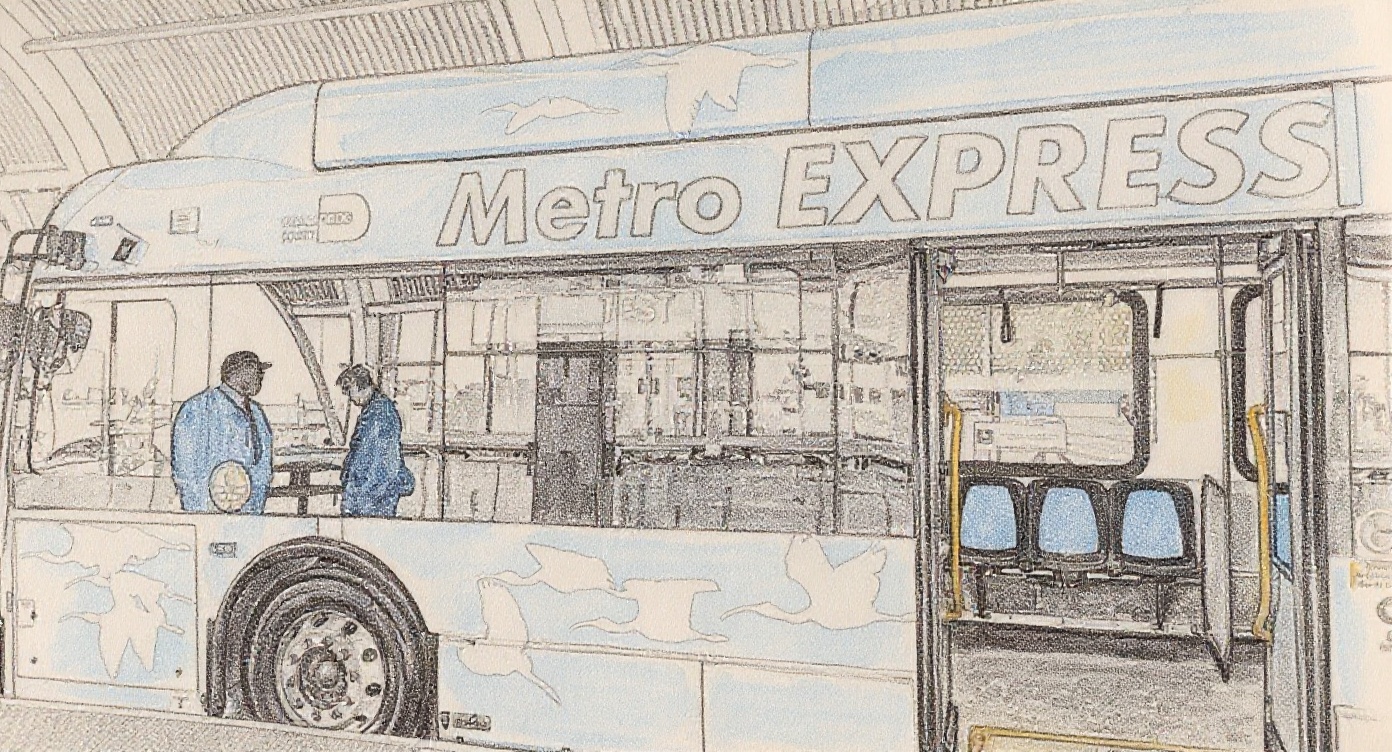
Miami-Dade Transit's Metro Express Bus Rapid Transit (BRT) service on the South Dade TransitWay, which launched October 27, 2025, is already outperforming the service it replaced. According to a Miami-Dade County resolution seeking a Florida Department of Transportation (FDOT) grant, Metro Express and the TransitWay Local service are already attracting approximately 2,500 more weekday riders than the prior express service. That is not a rounding error — that is a mandate. The BRT corridor delivers what skeptics said South Florida riders would never accept:
- Air-conditioned stations with level boarding, real-time arrival displays, free Wi-Fi, and bike storage; buses equipped with charging ports and easy boarding through all doors.
- Service as frequent as every 7.5 minutes during weekday peak periods.
- A service area anchored in Homestead, whose population grew 41% since 2010 to 85,796 residents in 2024.
The lesson is obvious: quality transit in South Florida generates riders. The question Miami-Dade must now answer honestly is why it refuses to build more of it at scale.
A $7.6 Billion Gap Is a Political Choice, Not an Act of God
On July 9, 2026, Mayor Daniella Levine Cava's office released a memo — co-authored with the Miami-Dade Department of Transportation and Public Works (DTPW) and first obtained by the Miami Herald — that put a number on the Strategic Miami Area Rapid Transit (SMART) program's funding crisis. While Miami-Dade has successfully launched its South Dade TransitWay, the other five planned transit corridors — North, Beach, East-West, Kendall, and Northeast — still lack funding; based on today's dollars, the county estimates the project is $7.6 billion short of what it needs to build, operate, and maintain the projects over the next 20 years.
That figure did not appear from nowhere. Construction and labor costs and the loss of major state transit monies have further strained funding. But calling this a surprise is dishonest — it is the predictable consequence of decades of politically easier choices:
- In 2002, Miami-Dade County voters approved a one-half percent local surtax with the purpose of improving rapid transit corridors through the People's Transportation Plan (PTP). That half-penny was never enough for a full rapid-transit network.
- Potential funding suggestions include an increase to the county's transportation sales tax — from half a penny to a full 1-cent surtax — and creating a property tax solely for transit projects.
- County commissioners are expected to discuss the memo at their July 21 meeting.
Raising Fares on Existing Riders Cannot Substitute for Taxing the Growth That Demands the System
Separately, the FY 2025-2026 county budget proposed squeezing existing riders to help close a wider $400 million deficit. The price to ride hasn't changed in more than a decade, but the proposed budget would raise fares from $2.25 to $2.75 per trip. A 22% increase in a single step does not meet best-practice criteria and is out of sync with peer systems that have increased fares by 25¢–30¢ only after a 6 to 12-month community engagement period. Meanwhile, Miami-Dade Transit carried about 261,800 riders per weekday in the first quarter of 2026. These are disproportionately low-income commuters who have no alternative — and who are being asked to fund a system that the rest of the region, which benefits enormously from reduced congestion and rising land values near transit, largely avoids paying for directly.
The Levine Cava memo's suggestion of a full 1-cent sales tax surtax for transit deserves a serious ballot conversation — not to replace the fare adjustment, which has a legitimate case after 12 years of stasis, but to make it honest. Riders should not be the primary financing mechanism for a regional infrastructure project that serves the entire South Florida growth economy. Developers building luxury towers minutes from Metrorail stations, employers who relocated to Brickell and Coral Gables for the urban premium — they are the direct beneficiaries of a transit network they do not adequately fund.
The July 21 commission meeting is not a budget technicality. It is the moment Miami-Dade decides whether Metro Express was a one-corridor anomaly or the proof-of-concept for the transit system this region has owed itself for 40 years.