Coral Gables does not build transit on impulse — it builds it on deliberation, and right now that deliberation is producing real results across three interlocking projects that together amount to the most coherent small-city mobility program in South Florida.
The Southern Loop Trolley Is Proving That Free, Frequent Service Changes Behavior
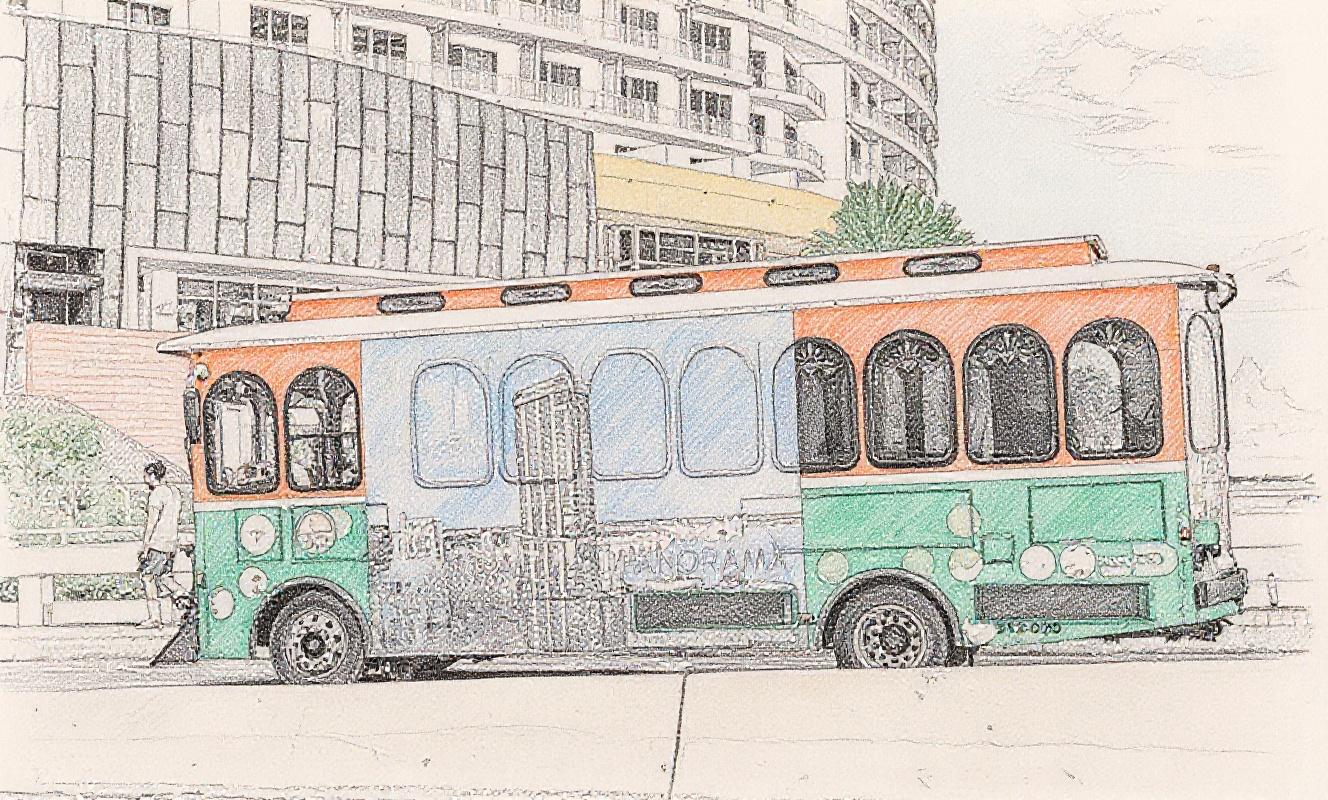
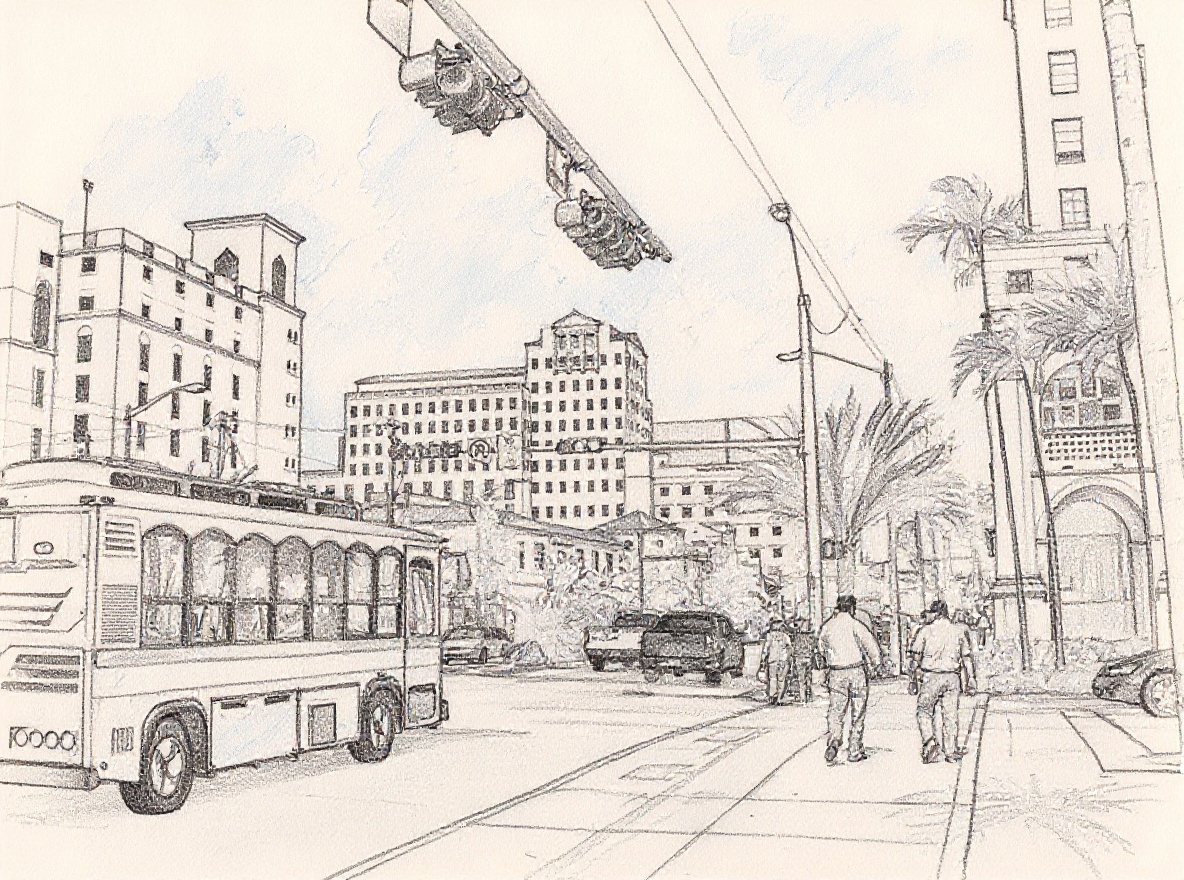
On November 3, 2025, Coral Gables launched the Southern Loop Trolley pilot, a free east-west route connecting the Douglas Road Metrorail Station to Red Road (Southwest 57th Avenue) along Ponce de León Boulevard. The city launched the one-year pilot route to extend trolley service from the Douglas Road Metrorail Station to Red Road, improving access to key destinations including the University of Miami, medical offices, schools, and other community hubs. The city's existing trolley carried over one million passengers last year, easing parking demand citywide and justifying its continued investment. The pilot is now in its final months and Coral Gables will soon face a straightforward but consequential choice: the city will soon have to decide whether to continue operating the Southern Loop trolley route in year two without a state grant to operate it. That is not a reason for hesitation — it is an invitation for the city to own the route as a permanent asset. A trolley system clearing a million annual riders does not need a state grant to justify itself; it needs a line item.
- Southern Loop connects UM, Lennar Foundation Medical Center, Merrick Park, and the South Miami border in a single corridor.
- City officials see the Southern Loop as a cornerstone for a regional Transportation Management Association (TMA) now in planning between Coral Gables, South Miami, and the University of Miami, which would coordinate cross-jurisdictional transit around U.S. 1.
- The city also received a $1 million grant from the Florida Department of Transportation to bring every trolley stop into Americans with Disabilities Act compliance.
The Mobility Hub Is Finally Moving from Renderings to Rebar
The Coral Gables Mobility Hub — a $60-million-plus multimodal structure planned for 245 Andalusia Avenue, steps from Miracle Mile — spent years in design purgatory, but 2026 has changed its trajectory decisively. The Coral Gables City Commission voted 4-1 at its February 24, 2026 meeting to award a pre-construction contract for the long-anticipated mobility hub to Kaufman Lynn Construction, with cost negotiations still ahead and city officials making clear they are prepared to walk away if terms are not met. By June, the city moved from internal planning to public preparation: the city scheduled a town hall meeting for June 24, 2026 at the Coral Gables Museum for businesses and property owners in the central business district, intended to introduce Kaufman Lynn Construction and to brief business owners on construction phasing, expected impacts, and strategies for keeping the district functioning during the build.
- The hub is to rise at 245 Andalusia Ave. within walking distance of Miracle Mile, with all but one of its levels offering parking across 700-plus spaces designed to accommodate self-driving vehicles.
- Its landscaped public rooftop terrace will feature venue space, a café restaurant, Wi-Fi lounging space, and recreational areas, alongside bicycle storage, dockless vehicle parking, ground-floor retail, and direct pedestrian access to Miracle Mile.
- The current Garage 1 on Andalusia Avenue will be demolished to make way for the project, with the hub designed to consolidate functions now served by both Garage 1 and the outdated, elevator-less Garage 4.
The Mobility Hub is not merely a parking garage — it is the transit anchor for a downtown that has always been better suited to walking than driving. Getting the construction phasing right so that nearby merchants survive the build is exactly the kind of careful implementation that distinguishes genuinely transit-friendly cities from ones that just build things.
The RTZ Overlay Is Turning a Legal Constraint Into a Design Opportunity
Coral Gables has also been navigating a more complex governance challenge: Miami-Dade County's Rapid Transit Zone (RTZ) framework, which grants county authority over development near Metrorail stations, including those that touch Coral Gables. Rather than resist the inevitable, the city has channeled that energy into crafting its own overlay. The Coral Gables City Commission voted 4-1 to approve the site plan for The Mark, a 393-unit mixed-use development at 1250 South Dixie Highway, and to expand the University Station Rapid Transit District Overlay to include the Gables Waterway properties at 6100 Caballero Boulevard at its April 14, 2026 meeting. Every commissioner voting yes stated on the record that the county's Rapid Transit Zone left them with no meaningful alternative, with Mayor Vince Lago framing it plainly: "A vote against the city RTZ is a vote in favor of the county RTZ."
- Miami-Dade County's RTZs govern development around Metrorail stations including those extending into parts of Coral Gables, aiming to encourage density and transit-oriented growth while shifting zoning authority from municipalities to the county.
- County Commissioner Raquel Regalado noted that Coral Gables is the only municipality with any RTZ participation — something she advocated — and agreed to amend her legislation to include lighting, signage, open space, and a minimum 100-foot separation for structures abutting single-family homes.
The overlay approach is smart governance: instead of watching county-approved towers rise without local input, Coral Gables is writing design standards, capturing impact fees, and ensuring that the density the Metrorail corridor is supposed to generate actually looks and feels like Coral Gables.
Three Projects, One Vision: A Downtown That Moves People Without Moving Cars
Taken together, the Southern Loop trolley, the Mobility Hub, and the RTZ overlay are not three separate initiatives — they are one integrated argument that the City Beautiful is making about what its downtown should become. The trolley feeds into the Metrorail at Douglas Road. The Mobility Hub consolidates parking so that surface lots near Miracle Mile can eventually be repurposed. The RTZ overlay channels new density around University Station into buildings with ground-floor retail and pedestrian streets. Each piece reinforces the others.
What Coral Gables gains when this goes right is significant: a downtown where a UM student, a Miracle Mile shopper, and a Metrorail commuter all share the same tree-lined sidewalk and the same free trolley — and where the City Beautiful's famous walkability is not just an aesthetic but a functional transportation system. South Florida's transit future does not belong only to megaprojects and billion-dollar corridors. It belongs to cities like this one, assembling the pieces with care.