Miami's most exciting transit-and-place story right now is not downtown, not Brickell, and not along any rail corridor — it is unfolding in Allapattah, where a freshly approved community reinvestment plan and a growing on-demand electric vehicle network are arriving in the same neighborhood at the same moment.
The Allapattah CRA's $243 Million Roadmap Prioritizes the Building Blocks of Transit-Ready Neighborhoods
Miami commissioners, sitting as the newly formed Allapattah Community Redevelopment Agency (CRA), unanimously adopted a $243 million spending roadmap just last week, on July 22, 2026. The plan is weighted exactly where it needs to be: $90 million for infrastructure, $75 million for affordable housing, $45 million for economic development, and $33 million for community facilities — a sequence that, read in order, describes how a walkable, transit-served neighborhood gets built.
- The CRA's 1,661-acre footprint runs from the Airport Expressway south to the Miami River, spanning a community of roughly 45,000 residents.
- The Allapattah CRA's taxable base currently sits at $3.1 billion; over 30 years, tax increment financing is projected to yield $877 million in reinvestable revenue.
- Infrastructure improvements include Northwest 17th Avenue streetscape and façade work — precisely the kind of pedestrian-scale street design that makes the last quarter-mile to a bus stop or rail station feel safe and inviting.
- The plan expressly calls for transit improvements, including Metrorail station upgrades and a neighborhood circulator shuttle, to come on-line during its mid-term phase.
Commissioner Miguel Gabela, who chairs the CRA board and has championed Allapattah for years, helped shepherd the initiative from its 2024 launch through this week's unanimous vote. That persistent, district-level commitment is exactly what turns redevelopment plans from documents into neighborhoods.
Freebee's Electric Microtransit Is Already on the Ground — and Growing
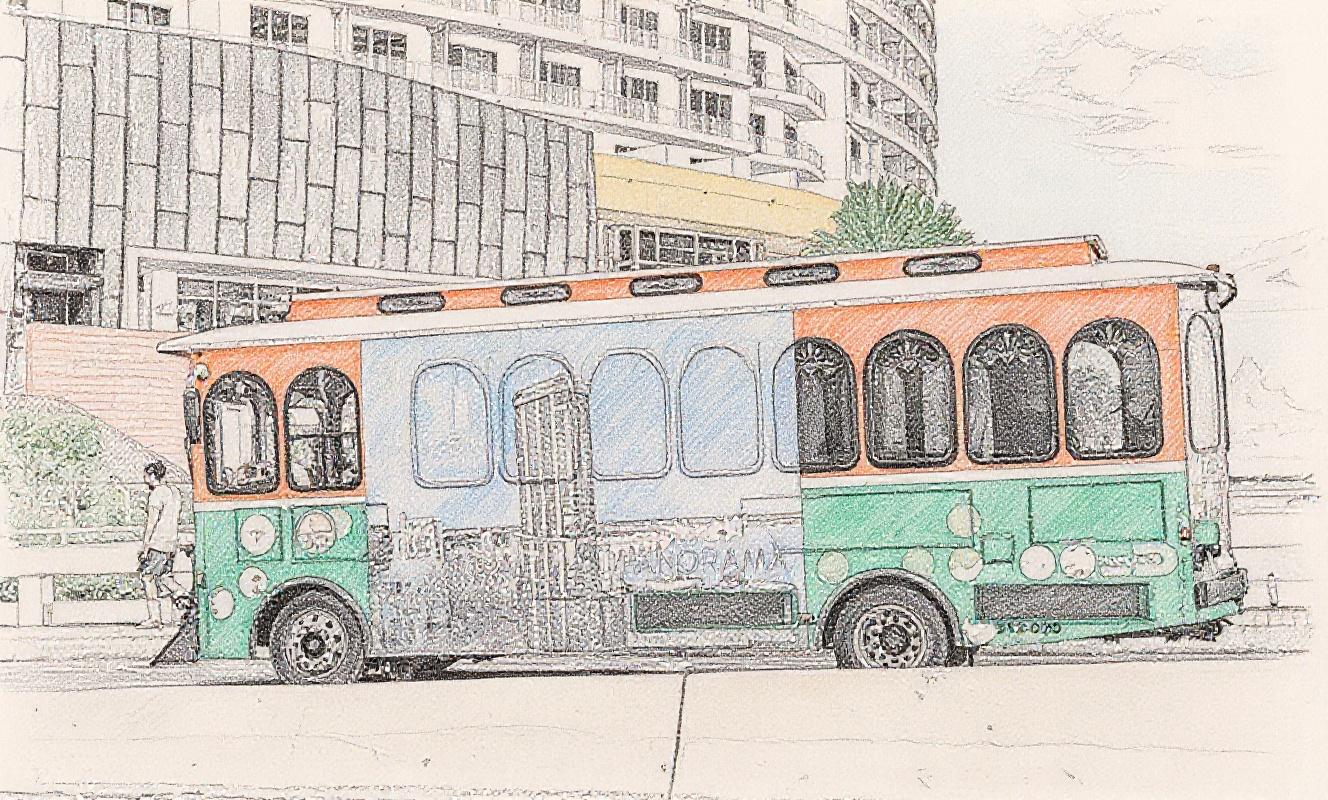
While the CRA's infrastructure dollars are still in their early deployment phase, Allapattah residents don't have to wait years for their first transit upgrade: Freebee's free, on-demand electric ride service is already operating there, and a $590,000 allocation before the Miami City Commission this month would extend and expand it through July 2027. The funding, drawn from Commissioner Gabela's share of the city's Miami For Everyone program, would cover four electric vehicles, charging infrastructure, drivers, and technology — a lean, efficient investment that delivers real mobility now.
- Freebee, founded in Miami Beach in 2012, is today the largest microtransit provider in Florida, operating 53 active destinations served by more than 300 vehicles.
- The company moved nearly 2 million passengers in 2025 and is on track to exceed 3 million in 2026, according to co-founder Jason Spiegel.
- Allapattah service runs Monday–Friday from 7 a.m. to noon and 2–7 p.m., and weekends from 9 a.m. to 7 p.m., connecting residents to employment centers, grocery stores, pharmacies, and educational institutions at no cost.
- In Palmetto Bay, Freebee deliberately doubled its fleet to provide first- and last-mile connections to the South Dade Transitway — a replicable model for linking Allapattah riders to the nearby Metrorail Orange Line.
The service's presence in Allapattah before the heavy capital work begins is meaningful: it builds the ridership habit, demonstrates demand, and makes the eventual circulator and station investments easier to justify.
What Tri-Rail's World Cup Numbers Prove About Miami's Transit Appetite
The broader South Florida transit system just received a striking real-world proof-of-concept. On June 27, 2026 — the day of the Portugal vs. Colombia World Cup match — Tri-Rail, operated by the South Florida Regional Transportation Authority (SFRTA), recorded its highest Saturday ridership ever: more than 11,000 rides in a single day. On June 24, a Wednesday, the system surpassed 17,000 total rides. These are not tourist-season flukes; they are the predictable result of pairing quality transit service with a destination people actually want to reach. Tri-Rail's 2025 annual ridership reached 4.5 million — a new all-time record — while its round-trip fares remain as low as $5.
Allapattah's Metrorail Orange Line stations sit within this same corridor. When a neighborhood has affordable housing, walkable streets, a neighborhood circulator, and a Metrorail connection — all of which the CRA plan envisions — it becomes a place where residents ride transit by choice, not by necessity. That is the difference between mobility equity and mobility adequacy.
The Opportunity in Front of Miami Is Allapattah Done Right
South Florida's transit conversation has long been dominated by mega-projects: corridors measured in billions, timelines measured in decades. Allapattah is the counterargument — and the complement. A $243 million community reinvestment plan, a $590,000 microtransit commitment, a Metrorail connection already in place, and a neighborhood of 45,000 people ready to receive investment without being displaced by it. The CRA's explicit goals of curbing displacement and expanding affordable housing are not in tension with transit — they are what makes transit work. Riders need to actually live near the stations.
If Miami gets Allapattah right — threading the CRA's infrastructure dollars through pedestrian improvements that lead toward transit, keeping the Freebee network running as a first-and-last-mile bridge, and building the mixed-income housing the plan envisions on the GSA site — it will have produced something rarer than a new rail line: a neighborhood where the people who need transit most are still there to ride it.