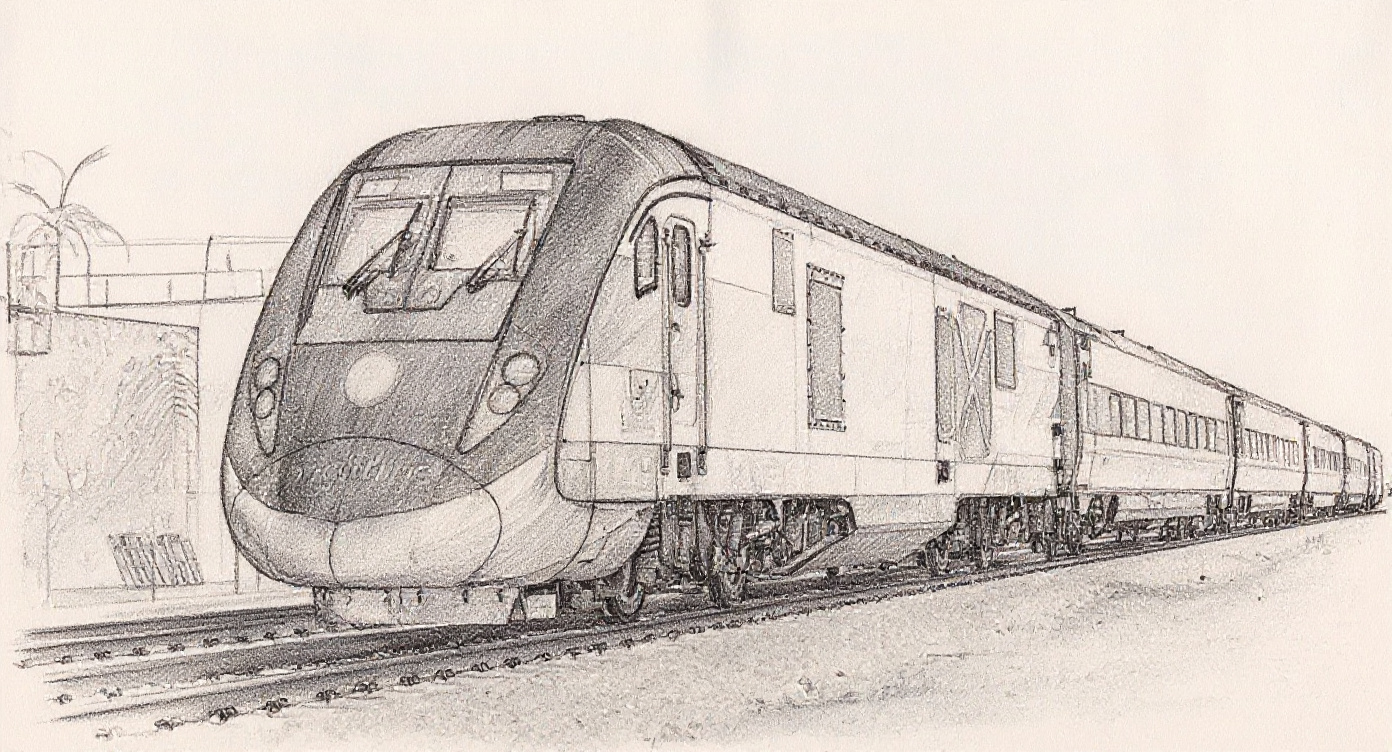
Brightline Florida's parent holding entities filed a pre-packaged Chapter 11 bankruptcy petition on September 25, 2026, in a New Jersey federal court, listing assets and liabilities each between $1 billion and $10 billion — while the company says not a single Miami-to-Orlando train will miss a stop.
What exactly did Brightline file, and why?
The Chapter 11 filing covers only Brightline's parent holding companies, not the operating entity that runs daily passenger service between Miami and Orlando, and it is structured around a Restructuring Support Agreement already endorsed by existing bondholders and bond insurer Assured Guaranty. That agreement locks in $490 million in new long-term capital, giving Brightline a stronger balance sheet without disrupting the trains its roughly 100,000 daily passengers rely on.
- Assured Guaranty and existing bondholders are the lead sources of the $490 million capital commitment.
- The filing is described as "pre-packaged," meaning creditors negotiated terms before the petition was submitted, typically accelerating court approval.
- Assets and liabilities are each listed in the $1 billion–$10 billion range, per court documents.
Will Miami-to-Orlando trains keep running normally?
Brightline's operating company is explicitly carved out of the bankruptcy filing, meaning ticketed passengers, schedules, and station operations in Downtown Miami, Fort Lauderdale, Boca Raton, West Palm Beach, and Orlando remain unaffected as of September 25, 2026. Brightline stressed in its announcement that day-to-day service continuity was a non-negotiable condition of the restructuring deal.
How is Brightline's ridership holding up heading into the restructuring?
Through August 2026, Brightline recorded a 14 percent year-over-year increase in ridership and a 17 percent rise in revenue, figures the company cited as evidence of underlying demand strength even as its parent balance sheet needed repair. Those growth numbers arrive as Brightline faces the capital-intensive work of expanding its South Florida footprint.
- Ridership growth of 14 percent and revenue growth of 17 percent were both measured year-over-year through August 2026.
- No specific passenger volume or total revenue dollar figure was disclosed in Brightline's announcement.
What does the restructuring mean for South Florida expansion plans?
Brightline says the infusion of $490 million in fresh capital will directly fund future growth, including new station development and commuter access partnerships with transit agencies in Miami-Dade, Broward, and Palm Beach counties. For Downtown Miami commuters in particular, those partnerships could eventually tie Brightline more tightly into the regional network alongside Miami-Dade Transit and the South Florida Regional Transportation Authority (SFRTA), which operates Tri-Rail.
- New stations are among the expansion projects Brightline named as targets for the restructured capital.
- Commuter access partnerships are planned across all three South Florida counties: Miami-Dade, Broward, and Palm Beach.
- SFRTA operates Tri-Rail, the commuter rail line that already connects those three counties and shares the MiamiCentral station footprint with Brightline.
Original reporting is drawn from the Brightline Official Press Room.