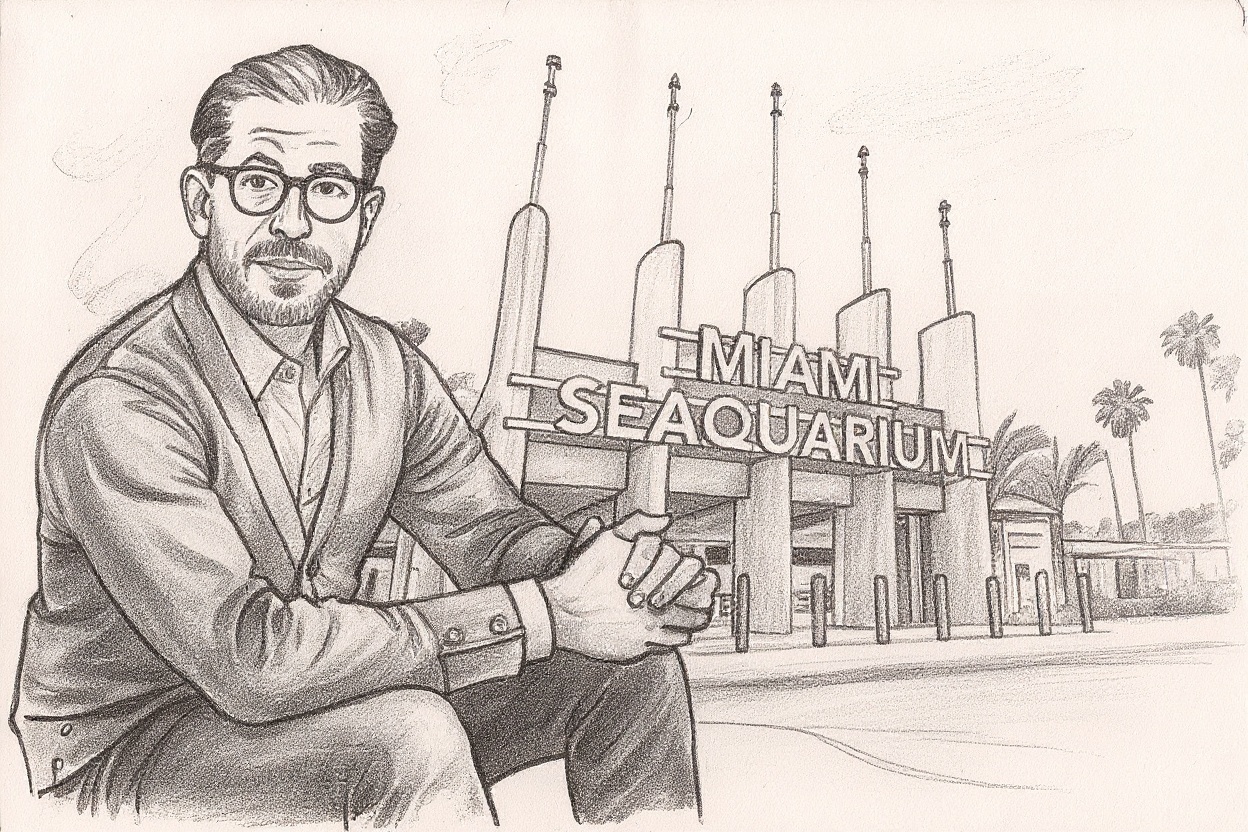
Miami-Dade County has filed a state permit application on behalf of developer David Martin's Terra Group to construct a superyacht marina at the vacant Miami Seaquarium property on Virginia Key, a project that would become the largest marina in Miami-Dade County if regulators grant approval.
What exactly is being proposed at the Seaquarium site?
Terra Group's plan calls for 325 wet boat slips and a dry-stack storage facility capable of holding 500 additional vessels across the 36.2-acre former Seaquarium property on Virginia Key. Miami-Dade County submitted the application to the Florida Department of Environmental Protection (FDEP) on Terra Group's behalf, and separately filed to rezone the parcel and establish a new special district under the county's Comprehensive Growth Management Plan.
- Total marina capacity: 825 vessel spaces combining wet slips and dry-stack storage
- Site area: 36.2 acres on Virginia Key, home to the now-shuttered Miami Seaquarium
- Rezoning and a new special district designation are also under county review
What environmental concerns has the state raised?
FDEP has flagged significant concerns about the marina's potential impact on sensitive natural resources in and around Biscayne Bay. State regulators identified risks to protected wetlands, coral formations, and overall water quality in the bay, signaling that the permitting path forward is unlikely to be straightforward.
- Biscayne Bay's protected wetlands could face disturbance from construction and ongoing marina operations
- Coral habitats in the project area are among the specific resources under scrutiny
- Water quality degradation from vessel traffic and fuel handling represents a core regulatory concern
Why does the Virginia Key location matter for Miami-Dade?
Virginia Key sits at the mouth of Biscayne Bay, placing any large-scale marina development in direct proximity to one of South Florida's most ecologically significant bodies of water. The Miami Seaquarium closed its doors after decades of operation, leaving a prominent bayfront parcel that county officials and private developers have been weighing for redevelopment. A marina of this scale — larger than any existing facility in Miami-Dade County — would represent a major shift in how the publicly visible waterfront site is used.
What happens next for the project?
The project faces a dual regulatory track: FDEP must evaluate the environmental permit application, while Miami-Dade County works through its own rezoning and comprehensive plan amendment process. Neither approval is guaranteed, and FDEP's stated environmental concerns suggest meaningful review ahead before any construction could begin.
Original reporting by The Real Deal Miami.