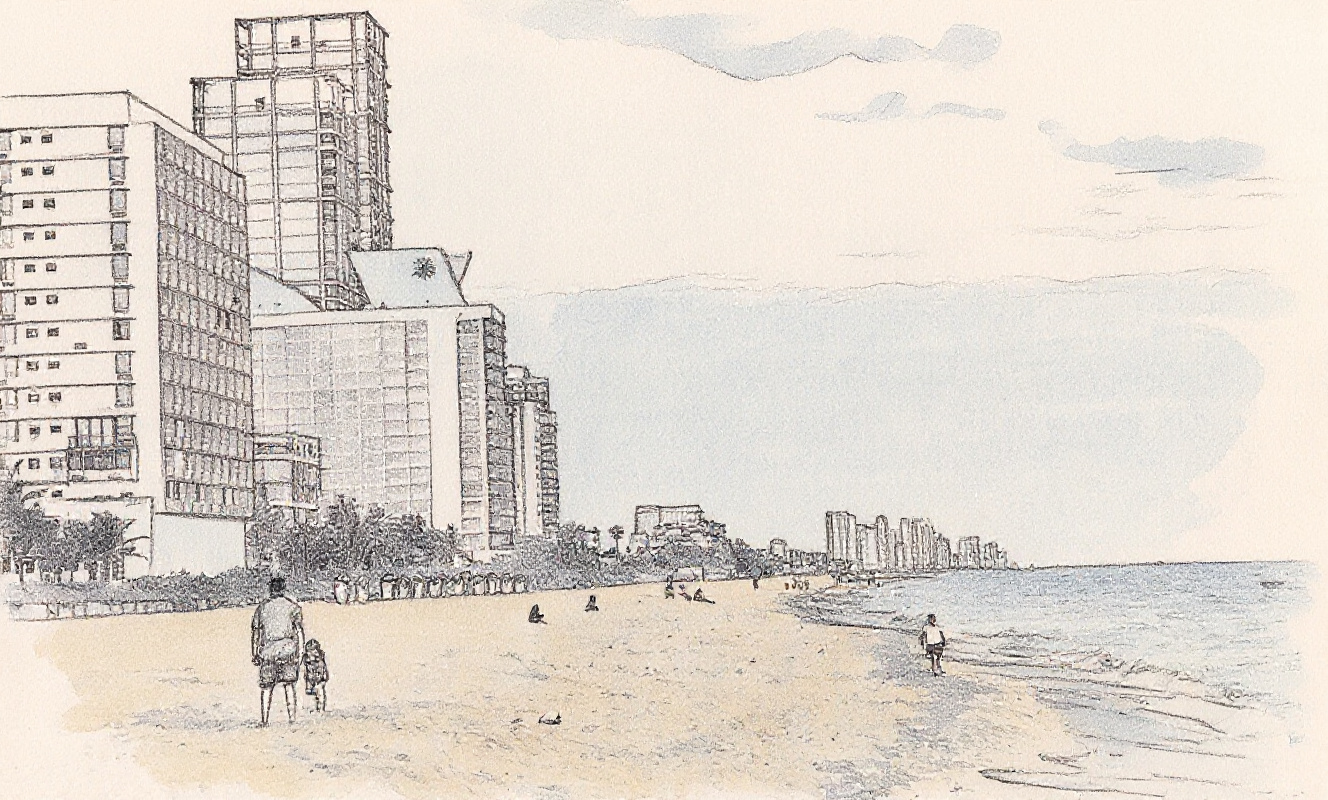
The State of Florida approved the City of Miami Beach's 2026 Beachfront Management Plan on September 3, authorizing a conservatively estimated $541 million framework that will govern how Miami Beach manages, protects, and activates its coastline over the next decade.
What does the 2026 Beachfront Management Plan actually do?
The plan establishes a unified, ten-year strategy for Miami Beach's shoreline, consolidating policies across natural resource protection, dune management, erosion control, Americans with Disabilities Act (ADA) accommodations, ocean rescue services, beach concessions, and special events permitting. Rather than addressing these areas through piecemeal ordinances, the City of Miami Beach will now operate under one cohesive regulatory framework backed by state authority.
- Dune management and erosion control are formally codified as priority investments under the plan's long-term budget.
- ADA accommodations across beachfront access points receive dedicated attention, signaling an expansion of accessible infrastructure along Miami Beach's shoreline.
- Ocean rescue, concessions, and special events rules are consolidated, streamlining what had been a fragmented permitting landscape for operators and organizers.
Why does protecting Miami Beach's shoreline carry such high financial stakes?
City of Miami Beach officials frame the beaches and dunes safeguarded by the plan as the primary physical barrier shielding more than $62.4 billion in taxable Miami Beach property value from storm surge and coastal flooding. Without healthy dunes and a maintained beach buffer, that enormous tax base — representing homes, hotels, retail, and commercial real estate — faces direct exposure to hurricane-force water intrusion.
- Storm surge protection is explicitly tied to dune integrity, making beach restoration a fiscal issue, not just an environmental one.
- $62.4 billion in taxable property value depends on the natural coastal buffer the plan is designed to sustain over the next ten years.
- Erosion control investments built into the $541 million budget are intended to keep pace with sea-level rise projections and increased storm frequency.
What is the timeline and budget structure for implementation?
The $541 million figure represents a conservative baseline estimate across the plan's full ten-year horizon, with state approval secured on September 3 clearing the way for the City of Miami Beach to begin executing programs under the new framework. Officials have characterized the budget as a floor rather than a ceiling, acknowledging that coastal management costs may rise as conditions evolve.
- State approval date: September 3
- Plan duration: Ten years
- Estimated budget: $541 million (conservative projection)
What comes next for Miami Beach beachfront operations?
With state authorization in hand, the City of Miami Beach moves into implementation, which will require coordinating across multiple city departments — from parks and recreation to public safety — as well as managing relationships with private concessionaires and event producers now subject to the consolidated ruleset. Residents and visitors can expect gradual changes to beach access infrastructure, ADA facilities, and the visible footprint of dune restoration projects along Miami Beach's oceanfront.
Original reporting and source documentation provided by the City of Miami Beach.